

St. Petersburg, Florida · Boat access only
Shell Key Preserve by Boat
1,828 acres of undeveloped barrier island at the mouth of Tampa Bay. No road, no bridge, no facilities — and some of the best shelling and bird habitat left in Pinellas County.
Shell Key Preserve is a 1,828-acre protected archipelago at the mouth of Tampa Bay, reachable only by boat or kayak. Shell Key itself is about 195 acres — one of the largest undeveloped barrier islands in Pinellas County. It has been managed by Pinellas County as a protected area since 2000.
Public access is limited to the northern and southern ends. The central core is closed to protect nesting birds. There are no restrooms, no fresh water, no concessions, and no shade.
No pets and no alcohol anywhere in the preserve, including the surrounding water. Empty shells may be collected; live animals may not.
Wayward Key Tours departs from Maximo Park in St. Petersburg, 20 to 30 minutes out. Gulf Escape $395 (2.5 hrs) · Half-Day Island Escape $575 (4 hrs) · Sunset Escape $425 (2.5 hrs), flat rates for up to 6 guests.
The 2.5-hour charter covers Shell Key well on its own. The 4-hour charter is not one island — it is two or three, with real time at each rather than a pass by.
Getting there
Boat only
no road, no bridge
From Maximo Park
20–30 min
depending on conditions
Preserve size
1,828 acres
island itself is 195
Facilities
None
no restrooms, no shade
The rules, up front
Shell Key is a protected preserve rather than a beach, and the rules are stricter than most visitors expect. Better to know before you go than to find out from a county officer.
No alcohol anywhere in the preserve — including the water around it. This one catches people out, because bringing your own drinks is normal on most charters, including ours. On a Shell Key day, leave them at home. We still bring the cooler, ice, and bottled water. If your group wants a charter where you can bring your own, we will happily plan a day that goes somewhere else.
No pets, anywhere, including the aquatic boundaries. Only certified assistance dogs are permitted; emotional support animals do not qualify. We do not allow pets aboard on any charter.
All plants and animals are protected. Empty shells are fine to collect. Live sand dollars, conchs, starfish, fiddler crabs, and anything else still occupied stay where they are.
Stay out of the posted core. Public use is the northern and southern ends only. The middle of the island is closed for nesting birds, and it is marked.
The back side, which is where we actually spend the time
Two completely different bodies of water on one island.
The Gulf side of Shell Key is what people photograph — open water, bright green, sand bottom. The back side is the one worth knowing about.
Behind the island the water is calm and protected almost regardless of what the Gulf is doing, shallow enough to stand in across large stretches, with seagrass beds running along the mangrove edge. It is not the bright green of the Gulf side, and it never will be — this is estuary rather than clean sand bottom.
That is exactly why the wildlife is there. Mangrove roots and seagrass shelter enormous numbers of small fish. Oyster beds, scallops, and the mangroves themselves filter the water and keep the seagrass healthy, and the seagrass keeps the nursery going. It is a working estuary, not a swimming pool, and everything else follows from that.
So we anchor back there and float. The Sunchill goes in, the bean bags come out, and the water does not move much. Dolphins come through hunting along the grass and the mangrove line — often close, entirely on their own terms, and generally uninterested in the paddleboarders they swim past. Rays glide over the flats. Manatees turn up, particularly when it is cooler.
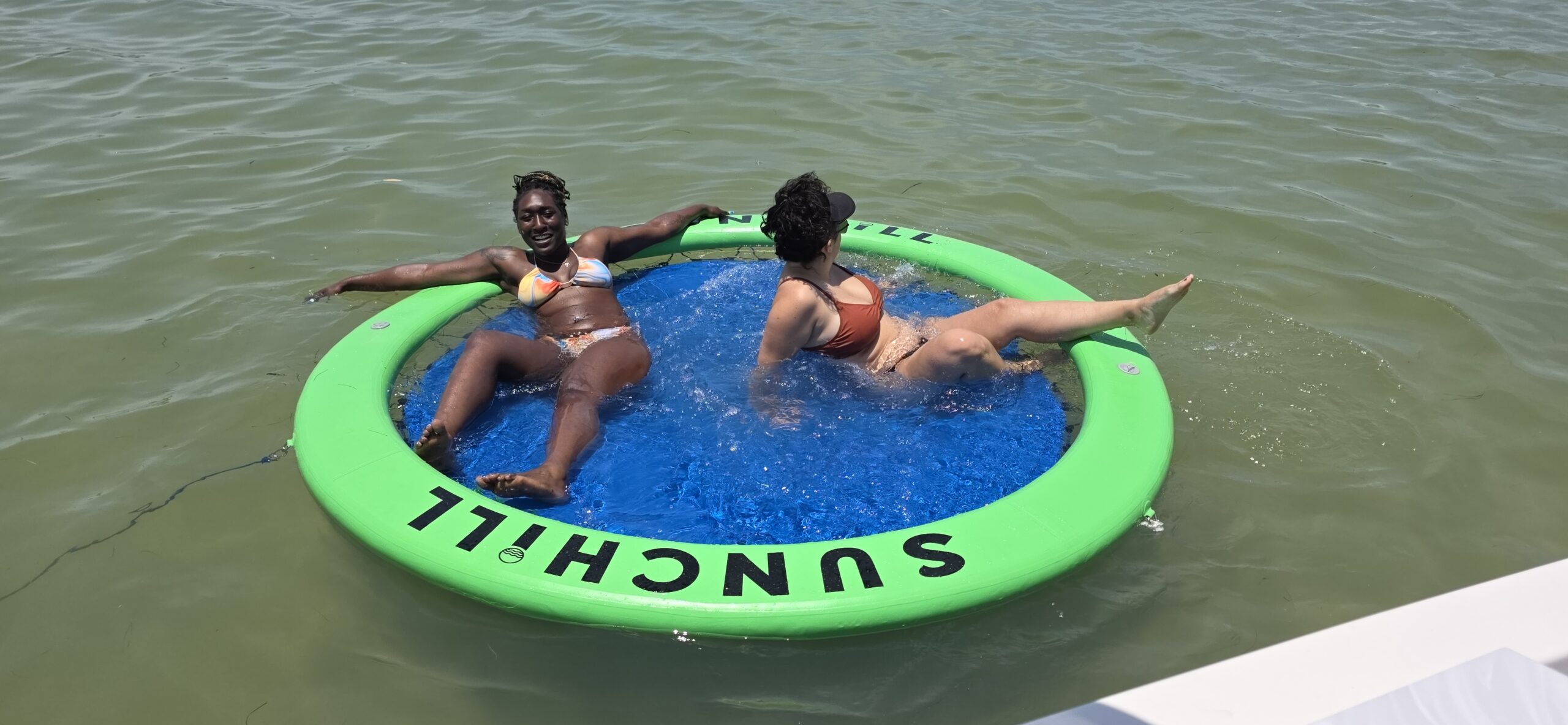
If you want the postcard water, we go round to the Gulf side. If you want to float somewhere calm and watch things happen, the back side is better, and it is not close.
Shelling at Shell Key
It is not named that by accident.
The shelling here is among the best in Pinellas County, for the same reason it is good at Three Rooker and Anclote Key: nobody can drive to it. A public beach with a parking lot is combed from sunrise, and by mid-morning hundreds of people have walked the tide line ahead of you. Shell Key gets whatever came in overnight, still sitting on the flats.
Come around low tide, when the water pulls back and exposes ground that is underwater most of the day. Best of all is a day or two after a storm or a winter cold front, when wind and surf have lifted material off the offshore bars and stacked it along the wrack line.
Common finds: fighting conchs, pen shells with iridescent interiors, scallops and cockles, whelks, olives, and empty sand dollars. Empty only — live animals are protected throughout the preserve.

The birds, which are the real reason it is protected
One of Florida’s most significant areas for shorebird nesting and wintering.
That designation is why the middle of the island is closed to people. It is not an arbitrary rule — this is genuinely important habitat, and it is studied as such.
Year-round
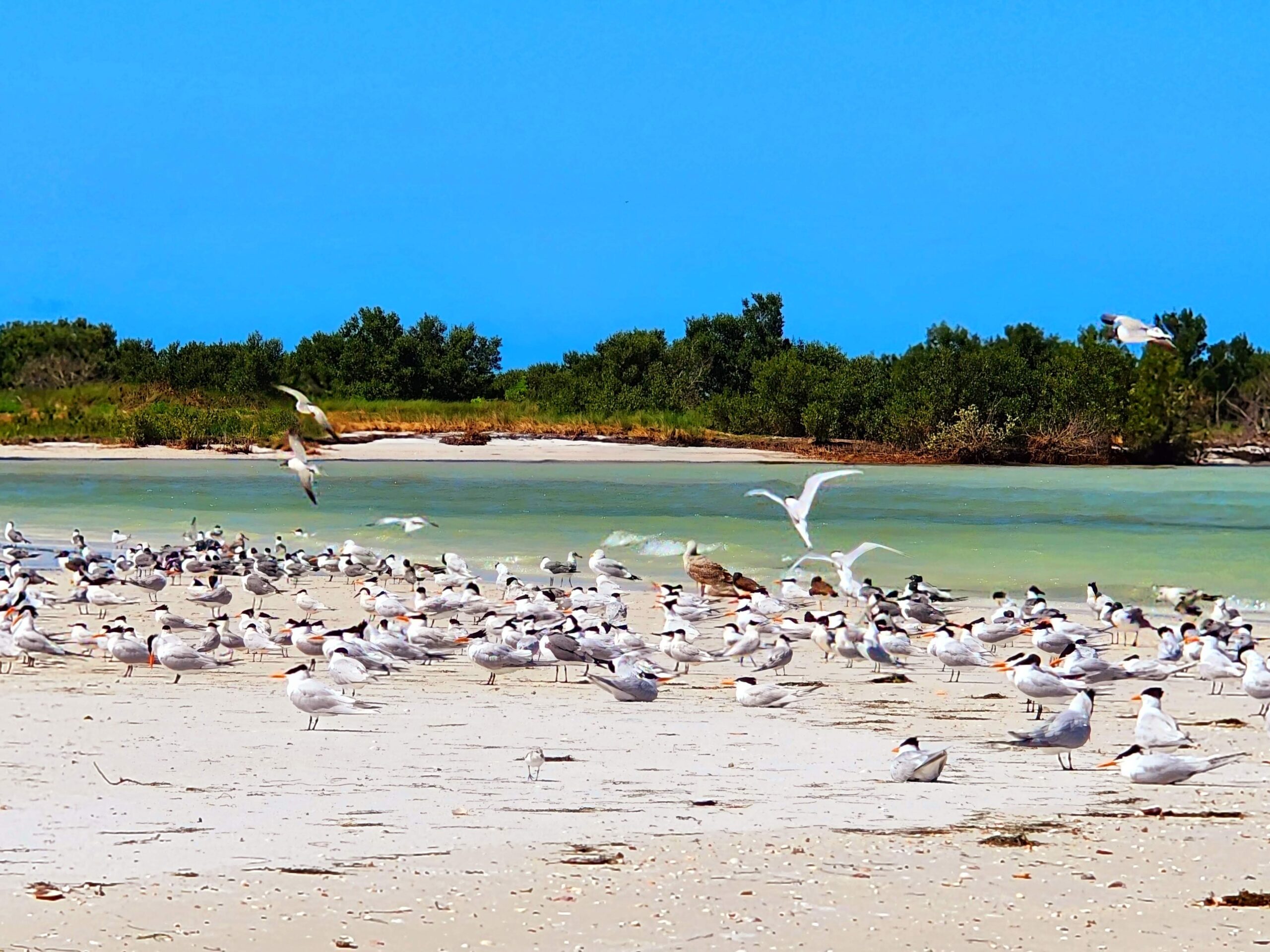
Reddish egrets, great blue herons, great egrets and snowy egrets, gulls, terns, black skimmers, and Wilson’s plovers. Roseate spoonbills turn up, and occasionally a magnificent frigatebird circling overhead.
Spring and summer
The island becomes a nursery. Least terns, American oystercatchers, royal terns, black skimmers, and snowy plovers nest in colonies. Nesting zones are roped off and the noise carries across the water before you see anything.
Autumn and winter
Migratory species arrive — red knots, sandpipers, plovers, and brown pelicans in flocks large enough to ripple across the water. Marbled godwits work the mudflats.
Sea turtles and the summer closures
Shell Key hosts close to a hundred sea turtle nests in a typical summer. Nesting season runs May 1 through September 30, and during those months nesting areas are marked and off limits, and campfires are prohibited across the preserve.
Loggerheads and green turtles both nest on this coast. If you are out here in summer, the marked areas matter — a nest that gets disturbed does not recover.
It is also, as it happens, why Tessa exists. Balloons and plastic bags look like jellyfish to a sea turtle, and we pick debris out of the water when we come across it.
Camping on Shell Key
Allowed, but genuinely primitive. Worth knowing what that means.
- South Public Use Area only — camping is not permitted anywhere else in the preserve
- Permit required — a reservation and a $6 permit from Pinellas County. One permit covers up to six people
- Leave no trace — everything in, everything out, including a portable toilet. There are no facilities of any kind
- No campfires May 1 – September 30 — turtle nesting season
- Never cut vegetation for firewood — bring your own and take the remains home. Cut wood on the island takes years to regrow
- Still no pets and no alcohol — the preserve-wide rules do not relax overnight
We do not run overnight trips, but if you have arranged a permit we can drop you and collect you. Worth mentioning when you book so the timing works around the tide.
Which charter reaches Shell Key
All flat rates for the whole boat, up to 6 guests, departing Maximo Park.
Gulf Escape — $395
2.5 hours · up to 6 guests
Plenty for Shell Key on its own — the run out, time on the flats and the back side, and dolphins along the way. The right choice if Shell Key is the day.
Half-Day Island Escape — $575
4 hours · up to 6 guests
Two or three islands in one day, not one. Shell Key plus Fort De Soto just across Bunces Pass, and often Egmont Key or Passage Key further out. The only charter that reaches Egmont.
Sunset Escape — $425
2.5 hours · up to 6 guests
Late light on the flats, then out for the sunset. Note the no-alcohol rule applies in the preserve, so the champagne comes out once we are clear of it.
- Enclosed restroom onboard — there is nothing on the island
- Shade aboard — there is none on the island either
- Cooler, ice, bottled water · freshwater rinse wand and deck sink
- Sunchill float, chair floaties, bean bags — the bean bags come ashore with you
- Shell collection bag provided · snorkel gear, kids’ to adult sizes
- Photos of your day — sent afterward
- Bring: hat, sunscreen, sunglasses, water shoes. No alcohol, no pets
- Minimum age 5, per USCG Type I life vest requirements
What a four-hour day looks like
The longer charter is not more time at one island. It is more islands.
Everything on the St. Pete side sits within reach of everything else. Shell Key, Fort De Soto, Egmont Key, and Passage Key are strung along the mouth of Tampa Bay, and on four hours you can genuinely work two or three of them into a day with real time at each — not a slow pass and a photograph.
A common shape: shelling the flats at Shell Key while the tide is low, across Bunces Pass to the sandbars off Fort De Soto for a swim, then either out to Egmont Key to snorkel the submerged batteries or back through the calm shallows on the Shell Key back side to float before heading in.
Which islands, and in what order, is decided that morning by the tide and the wind rather than by a printed itinerary. Passage Key only exists as a walkable sandbar at low tide. Egmont sits where bay currents meet the Gulf and is not always comfortable. Shell Key’s flats appear and disappear with the water. Captain Keith sequences the day around all of that, which is most of what you are paying for.
On the 2.5-hour charter, pick one. Shell Key on its own is a good afternoon — the flats, the back side, dolphins along the way. Trying to add a second island to a short charter mostly means spending the day travelling.
Egmont Key and Passage Key are 40 minutes or more each way from the ramp. Those two need the four hours, and we would rather say so than have you feel rushed.
Nearby on the St. Pete side
Fort De Soto by boat
Just across Bunces Pass. Arriving by water gets you the sandbars and the back side of the park.
Read the Fort De Soto guide →Egmont Key
Submerged Civil War batteries you can snorkel over, an 1848 lighthouse, and gopher tortoises. Needs the 4-hour charter.
Read the Egmont Key guide →St. Petersburg charters
Everything the Maximo Park departure opens up — the Skyway, the Bayway, the Don CeSar, Boca Ciega Bay.
See St. Pete charters →Things to do on the water
The full picture of the St. Pete side, and how it differs from a Clearwater day.
See the St. Pete guide →Common questions about Shell Key
How do you get to Shell Key?
By boat or kayak only. There is no road, no bridge, and no way to walk in. Wayward Key Tours departs from the Maximo Park boat ramp in St. Petersburg, roughly 20 to 30 minutes out depending on conditions. A passenger ferry also runs from the Fort De Soto boat ramp and from Madeira Beach, though a ferry lands you there on its schedule rather than the tide's.
Where exactly is Shell Key Preserve?
At the mouth of Tampa Bay, just south of Pass-a-Grille and across Bunces Pass from Fort De Soto. The preserve covers roughly 1,828 acres of islands, flats, and water. Shell Key itself is about 195 acres, one of the largest undeveloped barrier islands in Pinellas County.
Can you go anywhere on the island?
No. Public access is limited to the northern and southern ends. The central core is closed to protect nesting birds, and it is posted. Shell Key is designated one of Florida's most important areas for shorebird nesting and wintering, which is the whole reason that middle section is off limits.
Are dogs allowed at Shell Key?
No. Pets are banned from the entire preserve, including its aquatic boundaries — meaning not on the island and not in the water around it. Only certified assistance dogs are permitted; emotional support animals do not qualify. Wayward Key Tours does not allow pets aboard regardless of destination.
Is alcohol allowed at Shell Key?
No. Alcohol is prohibited throughout Shell Key Preserve, including the surrounding waters. This is a county rule and it is enforced. On charters that include a Shell Key stop, leave the drinks at home — we will still bring the cooler, ice, and bottled water. If you want a charter where you can bring your own, we will happily plan a day that goes elsewhere.
Are there restrooms on Shell Key?
No. There are no restrooms, no fresh water, no concessions, and essentially no shade anywhere in the preserve. The nearest facilities are at Fort De Soto Park. Our boat has an enclosed restroom onboard, a freshwater rinse wand, and a cooler with ice and bottled water, so most guests treat the boat as their base.
How much does a Shell Key charter cost?
Flat rates for the whole boat, up to 6 guests. The Gulf Escape is $395 for 2.5 hours and reaches Shell Key comfortably. The Half-Day Island Escape is $575 for 4 hours and lets you combine Shell Key with Fort De Soto, Egmont Key, or Passage Key. The Sunset Escape is $425 for 2.5 hours.
Is the shelling actually good at Shell Key?
It is among the best in Pinellas County, and the reason is simple: nobody can drive there. A public beach gets combed from sunrise. Shell Key gets whatever the tide brought in overnight, still sitting on the flats. Come around low tide, ideally a day or two after a storm or a winter cold front.
Can we take shells home from Shell Key?
Empty shells, yes. Live ones, no. Removing live animals from the preserve is prohibited — that includes live sand dollars, conchs, starfish, fiddler crabs, and anything else still occupied. All plants and animals in the preserve are protected. The rule that keeps you right: take empties only.
What is the back side of Shell Key like?
Completely different from the Gulf side, and it is where we go to float. The water behind the island is calm and protected, shallow, with seagrass beds along the mangrove edge. It does not have the bright green clarity of the open Gulf, because this is estuary rather than sand bottom — and that is exactly why the wildlife is there. Dolphins work these shallows hunting fish, often swimming right past paddleboarders without much interest in them.
Will we see dolphins at Shell Key?
Frequently, and the back side is the best of it. Seagrass beds and mangrove roots shelter enormous numbers of small fish, so dolphins patrol that edge deliberately. They are not performing for anyone — they are hunting, which is more interesting to watch. Manatees also turn up in the preserve shallows, particularly in cooler months.
What birds are at Shell Key?
It is one of the state's most significant bird habitats. Year-round you will see reddish egrets, great blue herons, great and snowy egrets, gulls, terns, black skimmers, and Wilson's plovers. Spring and summer bring nesting colonies of least terns, American oystercatchers, royal terns, and snowy plovers. Autumn and winter bring migratory red knots, sandpipers, plovers, and brown pelicans in large flocks. Roseate spoonbills and marbled godwits turn up too.
Are there sea turtles at Shell Key?
Yes. The preserve hosts close to a hundred sea turtle nests in a typical summer. Nesting season runs May 1 through September 30, and nesting areas are marked and off limits during that period. Campfires are also prohibited across those months for the same reason.
Can you camp on Shell Key?
Yes, primitive leave-no-trace camping is allowed on the South Public Use Area only, with a reservation and a $6 permit from Pinellas County. One permit covers up to six people. There are no facilities, so campers must bring and remove portable toilets, and take out everything they bring in. Campfires are prohibited May 1 through September 30 during turtle nesting season. Wayward Key Tours does not run overnight trips, but we can drop you and collect you if you have arranged a permit.
Is Shell Key good for kids?
Very. The shallows on the back side are calm, warm, and easy to stand up in, and shelling is a treasure hunt with a real reward. There are no lifeguards anywhere in the preserve and conditions shift with the tide, so supervision matters. On our charters Captain Keith stays on watch whenever guests are in the water. Minimum age is 5, per U.S. Coast Guard life vest requirements.
When is the best time to visit Shell Key?
For shelling, winter — cold fronts push fresh material ashore, and the low tides fall early. For birds, autumn through spring brings the migratory species, and spring and summer bring the nesting colonies. For calm water and floating, most days on the back side. Morning and late afternoon generally give the calmest water and the best light.
How many islands can we visit in one charter?
On the 4-hour Half-Day Island Escape, most groups comfortably reach two or three with real time at each. On the 2.5-hour Gulf Escape, one — Shell Key on its own is a good afternoon, but adding a second island to a short charter mostly means spending the day travelling. Egmont Key and Passage Key are 40 minutes or more each way from the ramp, so both need the four hours.
Can we combine Shell Key with Egmont Key or Fort De Soto?
Yes, and on the 4-hour Half-Day Island Escape you are not limited to one extra stop. Two or three islands in a day is normal — Shell Key, Fort De Soto just across Bunces Pass, and often Egmont Key or Passage Key further out, with real time at each. The order is decided that morning by the tide and the wind. A 2.5-hour charter is enough for Shell Key on its own; anything beyond that needs the four hours.
Is there any shade at Shell Key?
None to speak of. Bring a hat, sunscreen, and something with sleeves. Our boat has a shaded area, which on a July afternoon matters more than people expect.
Book a private Shell Key charter
Departing Maximo Park in St. Petersburg. Your group only, up to 6 guests, with the day timed around the tide — which at Shell Key decides how much beach there is to walk.
Gulf Escape
$395
2.5 hours · Shell Key on its own
Half-Day Island Escape
$575
4 hours · adds Fort De Soto or Egmont
Sunset Escape
$425
2.5 hours · champagne after the preserve