
St. Petersburg, Florida · Arriving by water
Fort De Soto by Boat
Five islands, 1,136 acres, and 2.7 million visitors a year — nearly all of whom see the same three beaches. Arriving by water gets you the rest of it.
Fort De Soto Park is a 1,136-acre park spread across five interconnected islands at the mouth of Tampa Bay — Mullet Key, Madelaine Key, St. Jean Key, St. Christopher Key, and Bonne Fortune Key. Dr. Beach named it the number one beach in the United States in 2005 and put it back in the top ten in 2024.
Almost everyone arrives by car. They pay the Pinellas Bayway toll, pay to park, and walk North Beach, East Beach, or the dog beach. Those are good beaches. They are also three stretches of an island chain full of sandbars, back-side flats, and shorelines with no road anywhere near them.
We depart from Maximo Park in St. Petersburg, 20 to 30 minutes out. Gulf Escape $395 (2.5 hrs) · Half-Day Island Escape $575 (4 hrs) · Sunset Escape $425 (2.5 hrs), flat rates for up to 6 guests.
Park size
1,136 acres
across five islands
From Maximo Park
20–30 min
by boat
Bird species recorded
328+
Great Florida Birding Trail site
Visitors per year
2.7 million
nearly all by car
The parts you cannot drive to
This is the whole argument for arriving by water.
Fort De Soto is not one beach. It is a chain of five islands joined by bridges and causeways, and the road only touches a fraction of it. Between and behind those islands is a network of sandbars, shallow flats, mangrove edges, and small quiet shorelines — nooks and crannies, and a lot of them.
None of that appears on the park map with a parking lot beside it, because you cannot get to it in a car. On a busy Saturday when North Beach is full, we anchor somewhere in that chain with nobody else in sight.
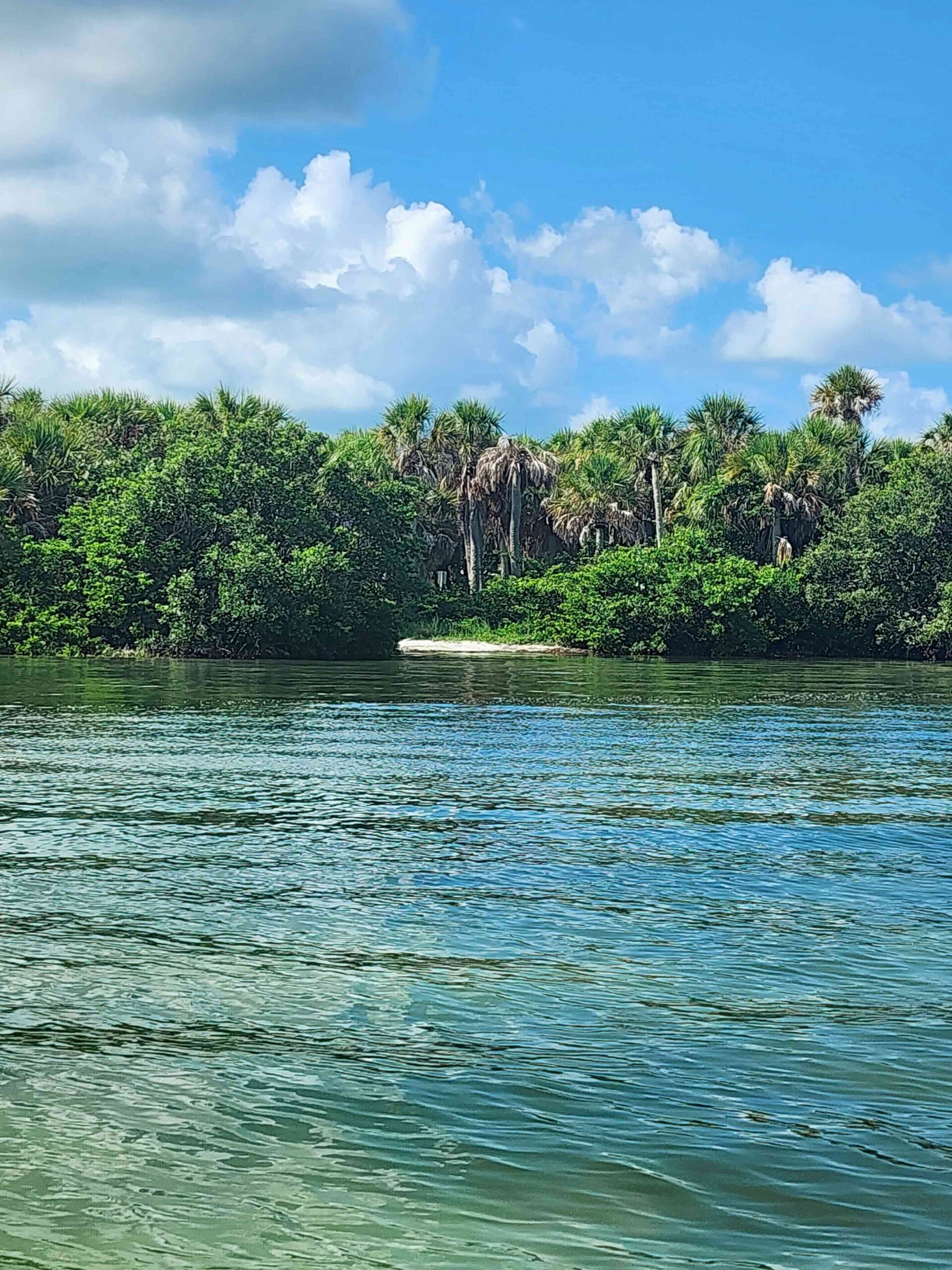
Sand Dollar Key
Just off Fort De Soto, and it only exists around low tide. As the water drops you can genuinely watch the sand break the surface — a little more every few minutes — until there is an island standing where twenty minutes earlier there was open water.
It is also the reason anchoring here takes some thought. Drop the hook in the wrong spot on a falling tide and you end up sitting on dry land waiting for the water to come back. Captain Keith reads where the bar is going to emerge and anchors accordingly, which sounds like a small thing right up until it is not.

The back side
Behind the islands the water is calmer and shallower, running along mangrove edges with seagrass flats. It does not have the bright turquoise of North Beach, because this is estuary rather than clean sand bottom — and that is exactly why the wildlife is there. Mangrove roots and seagrass shelter enormous numbers of small fish, so dolphins and rays work that edge deliberately.
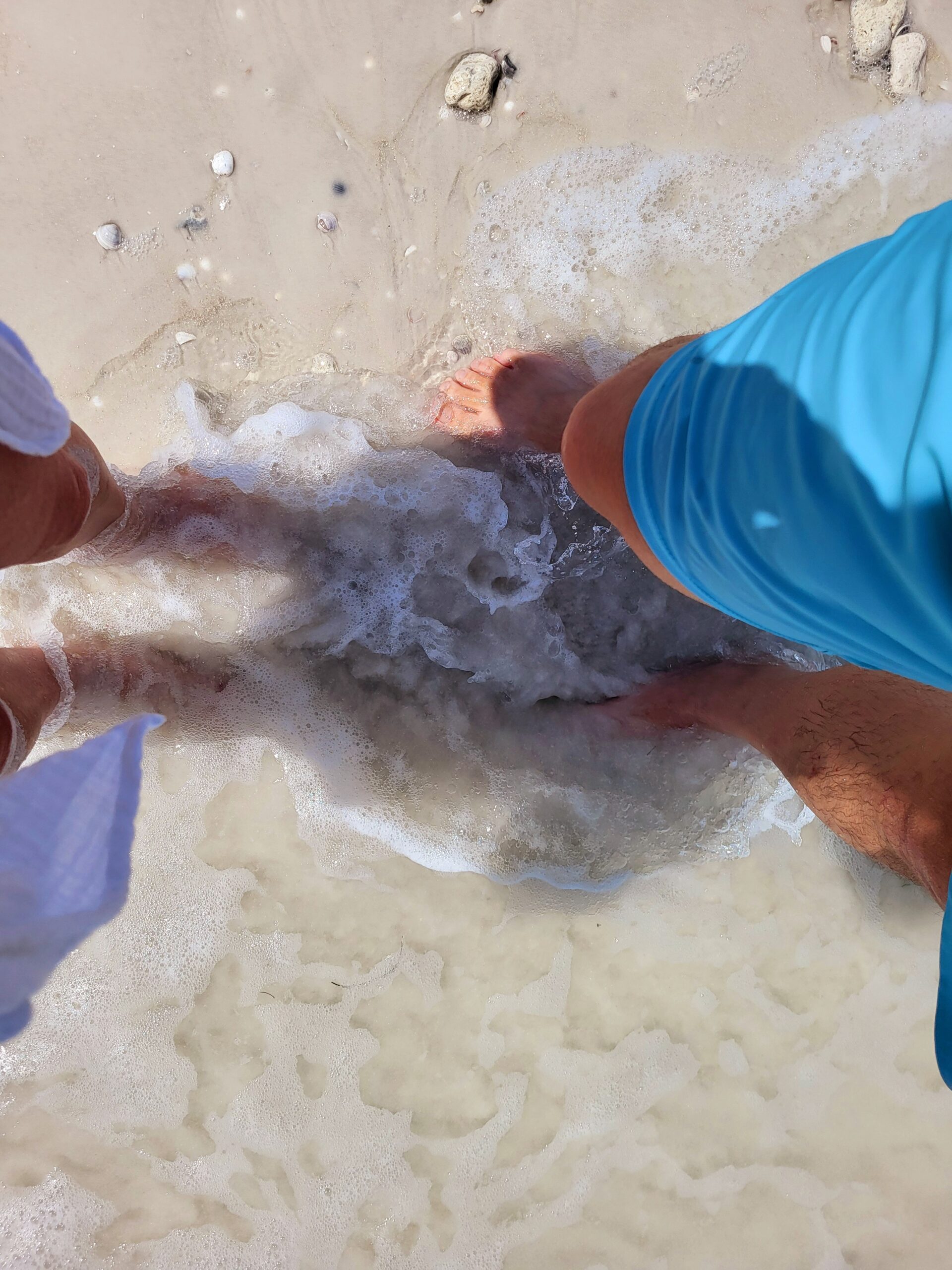
It is also the right call on a breezy day, when the Gulf side is uncomfortable and back here barely moves.
The fort itself
Older, stranger, and better documented than most visitors realise.
The Tocobaga people fished and gathered shellfish on these islands from roughly 1000 to 1500 CE. Hernando de Soto landed near Tampa Bay in the 1530s, and the fort eventually took his name in 1900.
In 1849 a party of U.S. Army engineers surveyed the area and recommended that Mullet Key and Egmont Key be fortified. One of them was a young officer named Robert E. Lee, more than a decade before the Civil War made him a household name.
Nothing happened for half a century. Construction finally began during the Spanish-American War in 1898 and finished in 1906 — by which point the war was long over. The post ran to 29 buildings including barracks, a hospital, a mess hall, and a blacksmith, with brick roads and a small railway for moving supplies. Batteries Laidley and Bigelow held 12-inch coast defence mortars. Two 6-inch rapid-fire Armstrong guns were later moved over from Fort Dade on Egmont Key.
It never fired a shot in combat. The post was active until 1910, mosquitoes and summer heat wore the garrison down, and most of the soldiers were transferred out. Pinellas County acquired the land and the park opened in 1963.
The batteries are still there and you can walk through them — along with the Quartermaster Storehouse Museum. Signage at the fort is thin, so a printed park guide helps.
If the military history is what interests you, Egmont Key is the other half of the story — same defensive plan, same era, except at Egmont the batteries have sunk into the shallows and you can snorkel over them.
Wildlife
328 recorded bird species, and a gateway site on the Great Florida Birding Trail.
Large sections of North Beach are protected for nesting and as a resting point for migrating birds — black skimmers, royal terns, American oystercatchers, and plovers among them. Spring and autumn migration here is exceptional, and the park is well known among birders for it.
Loggerhead sea turtles nest on these beaches, with a designated nesting area on North Beach. Nesting season runs roughly May through October and marked nests are off limits.
From the water: dolphins in the channels and along the seagrass edges, rays gliding over the flats, and manatees in the calmer stretches, more often in cooler months. This is not a place where you glimpse a fin and call it a sighting — dolphins through here jump.
Driving in versus arriving by boat
Both are worth doing. They are not the same day.
By car
North Beach, East Beach, the historic fort and museum, the dog beach, the fishing piers, the paved trail, the campground, and the concessions. You pay the Pinellas Bayway toll and a parking fee. Open 7am to sunset. Great for a full family day with facilities.
By boat
The sandbars, Sand Dollar Key at low tide, the back-side flats, the mangrove edges, and the shorelines with no road near them. No crowd, no parking, no schedule. Add Shell Key or Egmont Key on the same trip. Restroom and shade aboard.
One thing the boat cannot do: the dog beach. Fort De Soto has the only designated area in the region where dogs are allowed on the sand, and it is genuinely good. We do not allow pets aboard on any charter, so if the dog is the point, drive in.
Which charter reaches Fort De Soto
All flat rates for the whole boat, up to 6 guests, departing Maximo Park.
Gulf Escape — $395
2.5 hours · up to 6 guests
Plenty for Fort De Soto on its own — the run out, a sandbar stop, the back side, and dolphins along the way.
Half-Day Island Escape — $575
4 hours · up to 6 guests
Two or three islands in a day, not one. Fort De Soto plus Shell Key across Bunces Pass, and often Egmont Key or Passage Key further out.
Sunset Escape — $425
2.5 hours · up to 6 guests
Late light on the flats, then out for the sunset. You pick the backdrop — the Skyway lighting up, the skyline, or open Gulf. Champagne flutes at sundown.
- Enclosed restroom onboard · shade aboard · freshwater rinse wand and deck sink
- Cooler, ice, bottled water — bring your own drinks in non-glass containers
- Sunchill float, chair floaties, bean bags — the bean bags come ashore with you
- Shell collection bag · snorkel gear, kids’ to adult sizes
- Photos of your day — sent afterward
- Captain Keith at the helm — USCG-licensed, former Navy diver, 11-year submariner, cardiac RN, and on watch whenever guests are in the water
- Minimum age 5 · no pets aboard · free parking at Maximo Park
Nearby on the St. Pete side
Shell Key Preserve
Just across Bunces Pass. Undeveloped, protected, and some of the best shelling in Pinellas County.
Read the Shell Key guide →Egmont Key
The other half of the fort story — submerged Civil War batteries you can snorkel over, plus an 1848 lighthouse.
Read the Egmont Key guide →St. Petersburg charters
Everything Maximo Park opens up — the Skyway, the Bayway arches, the Don CeSar, Boca Ciega Bay.
See St. Pete charters →Things to do on the water
The full picture of the St. Pete side and how it differs from a Clearwater day.
See the St. Pete guide →Common questions about Fort De Soto
Can you get to Fort De Soto by boat?
Yes, and it is a genuinely different visit. Most of the park's 2.7 million annual visitors arrive by car over the Pinellas Bayway, pay the toll and the parking fee, and walk the same three beaches. Arriving by water gets you the sandbars, the back side, and the stretches of the island chain that have no road anywhere near them.
What is Sand Dollar Key?
A sandbar just off Fort De Soto that only exists around low tide. As the water drops you can watch the sand break the surface, a little more every few minutes, until there is an island where twenty minutes earlier there was open water. It is also why anchoring here takes some thought — drop the hook in the wrong spot on a falling tide and you end up sitting on dry land waiting for the water to come back.
How big is Fort De Soto Park?
About 1,136 acres spread across five interconnected islands — Mullet Key, the main one, plus Madelaine Key, St. Jean Key, St. Christopher Key, and Bonne Fortune Key. There are nearly three miles of white-sand Gulf beach. The islands are joined by bridges and causeways, which is what makes the water between and behind them so interesting from a boat.
What is the history of Fort De Soto?
The Tocobaga people fished and gathered shellfish on these islands from roughly 1000 to 1500 CE. In 1849 a team of U.S. Army engineers — including Robert E. Lee, then a young officer — surveyed the area and recommended that Mullet Key and Egmont Key be fortified. Construction finally began during the Spanish-American War in 1898 and finished in 1906. The fort took its name in 1900 from the Spanish explorer Hernando de Soto. It was active until 1910 and never fired a shot in combat. Pinellas County acquired the land and the park opened in 1963.
What can you see at the historic fort?
The original gun batteries and artillery emplacements are still there and open to walk through — Batteries Laidley and Bigelow, built for 12-inch coast defence mortars. There are also two 6-inch rapid-fire Armstrong guns that were moved over from Fort Dade on Egmont Key. The Quartermaster Storehouse Museum holds artifacts from the fort's active years. At its height the post had 29 buildings, brick roads, and a small railway for moving supplies.
Has Fort De Soto been named a top beach?
Repeatedly. Dr. Beach named it the number one beach in the United States in 2005, and it made his top ten again in 2024. Tripadvisor named it America's Top Beach in 2009. It was also listed among the top ten dog-friendly beaches in America in 2024.
Is there a dog beach at Fort De Soto?
Yes — Paw Playground, which is the only dog park in the area where dogs are permitted on the beach in a designated section, plus two fenced areas with water stations. It is one of the reasons the park is so popular. Worth knowing that we do not allow pets aboard our charters, so if the dog beach is the goal, that is a drive-in day rather than a boat day.
How much does a Fort De Soto boat charter cost?
Flat rates for the whole boat, up to 6 guests. The Gulf Escape is $395 for 2.5 hours and covers Fort De Soto and its sandbars comfortably. The Half-Day Island Escape is $575 for 4 hours and lets you combine Fort De Soto with Shell Key, Egmont Key, or Passage Key. The Sunset Escape is $425 for 2.5 hours.
Do we still pay the park entrance fee if we arrive by boat?
The $6 parking fee and the Pinellas Bayway tolls apply to vehicles. Arriving by water on a charter, you are not parking a car — we depart from Maximo Park, where parking is free. If you want to go ashore inside the park itself, normal park rules apply once you are on land.
How long does it take to reach Fort De Soto by boat?
Roughly 20 to 30 minutes from the Maximo Park boat ramp in St. Petersburg, depending on conditions. That leaves plenty of a 2.5-hour charter for a sandbar stop, the back side, and dolphins along the way.
What birds are at Fort De Soto?
Over 328 species have been recorded in the park, which is why it is a gateway site on the Great Florida Birding Trail. Large sections of North Beach are protected for nesting and for migrating birds to rest — black skimmers, royal terns, and American oystercatchers among them. Spring and autumn migration is exceptional here.
Are there sea turtles at Fort De Soto?
Yes. Loggerhead sea turtles nest on these beaches, and there is a designated nesting area on North Beach. Nesting season runs roughly May through October, and marked nests are off limits.
Is the shelling good at Fort De Soto?
Good, and better from a boat. The beaches you can drive to are combed from opening time — the park sees more than 2.7 million visitors a year. The sandbars and back-side flats that only open up at low tide, and that nobody can walk to, are where the shelling holds up. Come around low tide, ideally a day or two after a storm or winter cold front.
Can we combine Fort De Soto with Shell Key or Egmont Key?
Yes, on the 4-hour Half-Day Island Escape — and not just one of them. Two or three islands in a day is normal. Shell Key is just across Bunces Pass, and Egmont Key and Passage Key sit further out toward the mouth of the bay. A 2.5-hour charter is enough for Fort De Soto on its own; anything beyond that needs the four hours.
Will we see dolphins around Fort De Soto?
Frequently. The channels and passes around the park are active water, and the seagrass flats behind the islands hold the fish the dolphins are after. This is not a stretch where you glimpse a fin and call it a sighting — dolphins through here jump.
Is Fort De Soto good for kids by boat?
Very. The sandbars are shallow, warm, and calm, and there is usually nobody else on the ones we reach. Minimum age is 5, per U.S. Coast Guard Type I life vest requirements. Captain Keith stays on watch the entire time guests are in the water, and there is an enclosed restroom onboard, which matters more with children than almost anything else.
What is the water like on the back side?
Calmer than the Gulf side and shallower, running along mangrove edges with seagrass flats. It does not have the bright turquoise of North Beach because it is estuary rather than clean sand bottom — and that is exactly why the wildlife is there. Mangrove roots and seagrass shelter huge numbers of small fish, so the dolphins and rays work that edge.
See the side of Fort De Soto the road misses
Departing Maximo Park in St. Petersburg, 20 to 30 minutes out. Your group only, up to 6 guests, with the day timed around the tide — which at Sand Dollar Key decides whether there is an island there at all.
Gulf Escape
$395
2.5 hours · Fort De Soto on its own
Half-Day Island Escape
$575
4 hours · adds Shell Key or Egmont
Sunset Escape
$425
2.5 hours · champagne included