Clearwater & St. Petersburg, Florida
A fully private charter built around finding wildlife — dolphins, manatees, rays, sea turtles, and shorebirds. Your group only, no fixed route, and a captain who knows where they feed.
The bottlenose dolphins here are a resident population, not a migratory one — they live in these waters year-round, which is why sightings are common in every season. Nobody honest guarantees wildlife, but the odds here are good.
Wayward Key Tours runs private dolphin and wildlife charters from Clearwater and from Maximo Park in St. Petersburg, for up to 6 guests. Gulf Escape $395 (2.5 hrs) · Half-Day Island Escape $575 (4 hrs) · Sunset Escape $425 (2.5 hrs), all flat whole-boat rates.
Captain Keith is USCG-licensed, a former Navy diver, and an 11-year Navy submariner. He is at the helm on every charter.
Finding them is less about luck than most people assume.
Dolphins go where the food is. That sounds obvious, but it is the whole difference between a captain who drives around hoping and one who knows where to slow down.
Mangrove root systems shelter enormous numbers of small fish — it is a nursery, essentially, and the dolphins know it. They work that edge deliberately. Along the Boca Ciega Bay waterway on the St. Pete side, and through the Intracoastal on the Clearwater side, easing along a mangrove shoreline is one of the more reliable ways to see them close in.
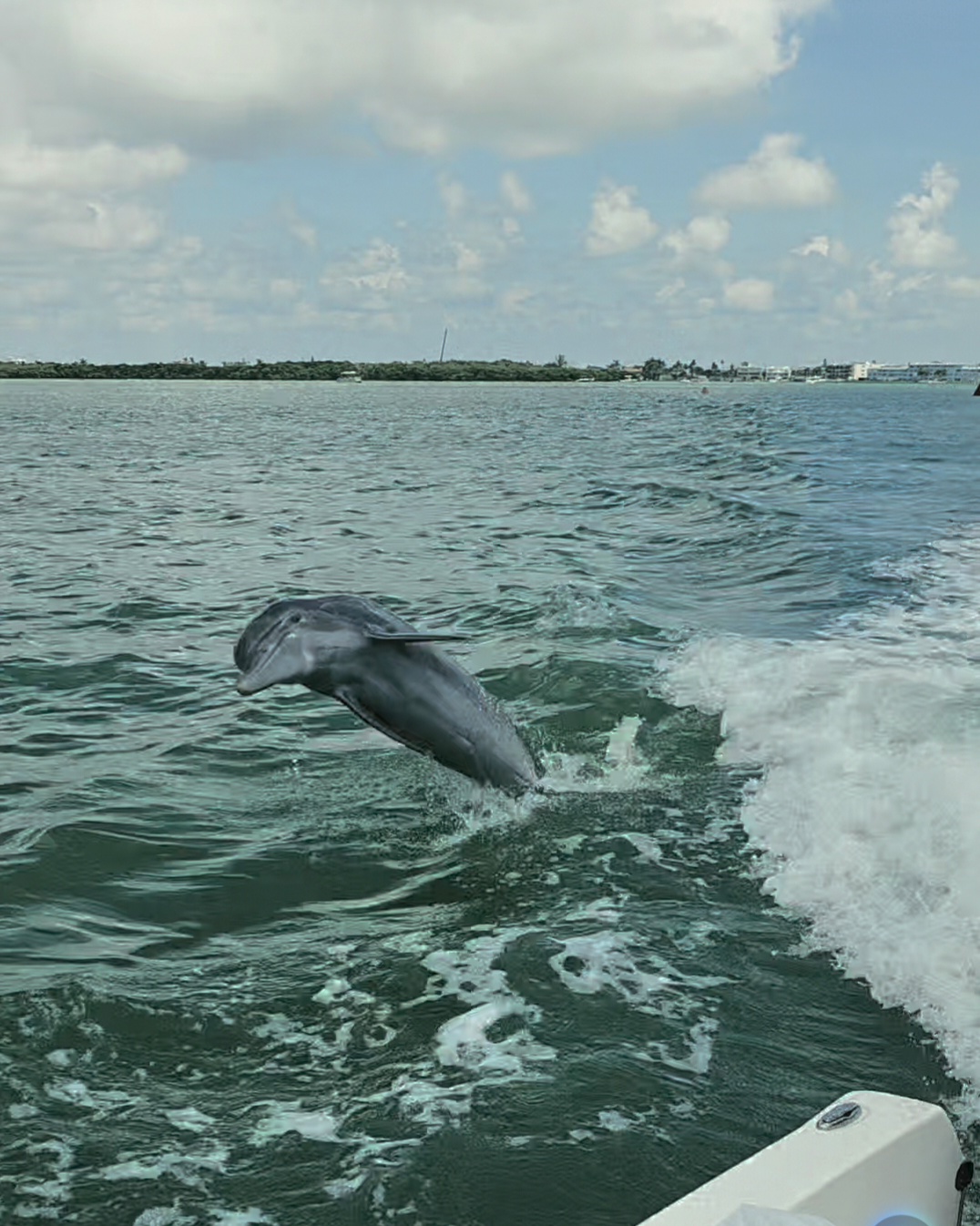
This is the best dolphin viewing on the St. Petersburg side, and almost nobody expects it. Cruise ships, commercial freighters, and loaded barges pass under the Sunshine Skyway throwing enormous wakes — and dolphins come in to surf them, jumping in front of the bow as the ship moves through. You cannot schedule it. You can, however, be in the right water at the right time of day, which is the point of having a local captain.
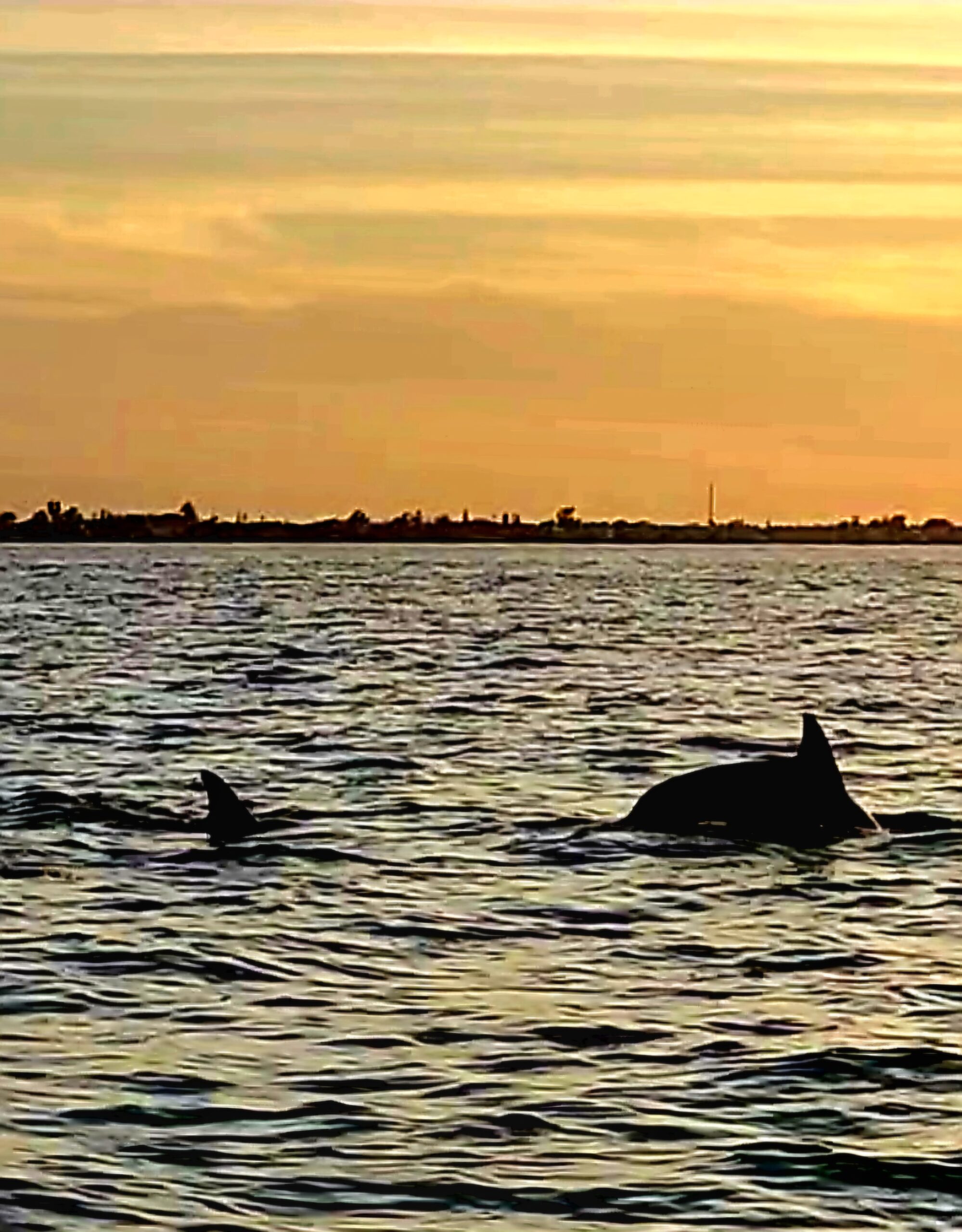
Dolphins are often active as the light goes, which is one of the quieter arguments for a sunset charter. You are on the water at the hour they tend to be feeding, and the flat evening water makes them much easier to spot than midday chop does.
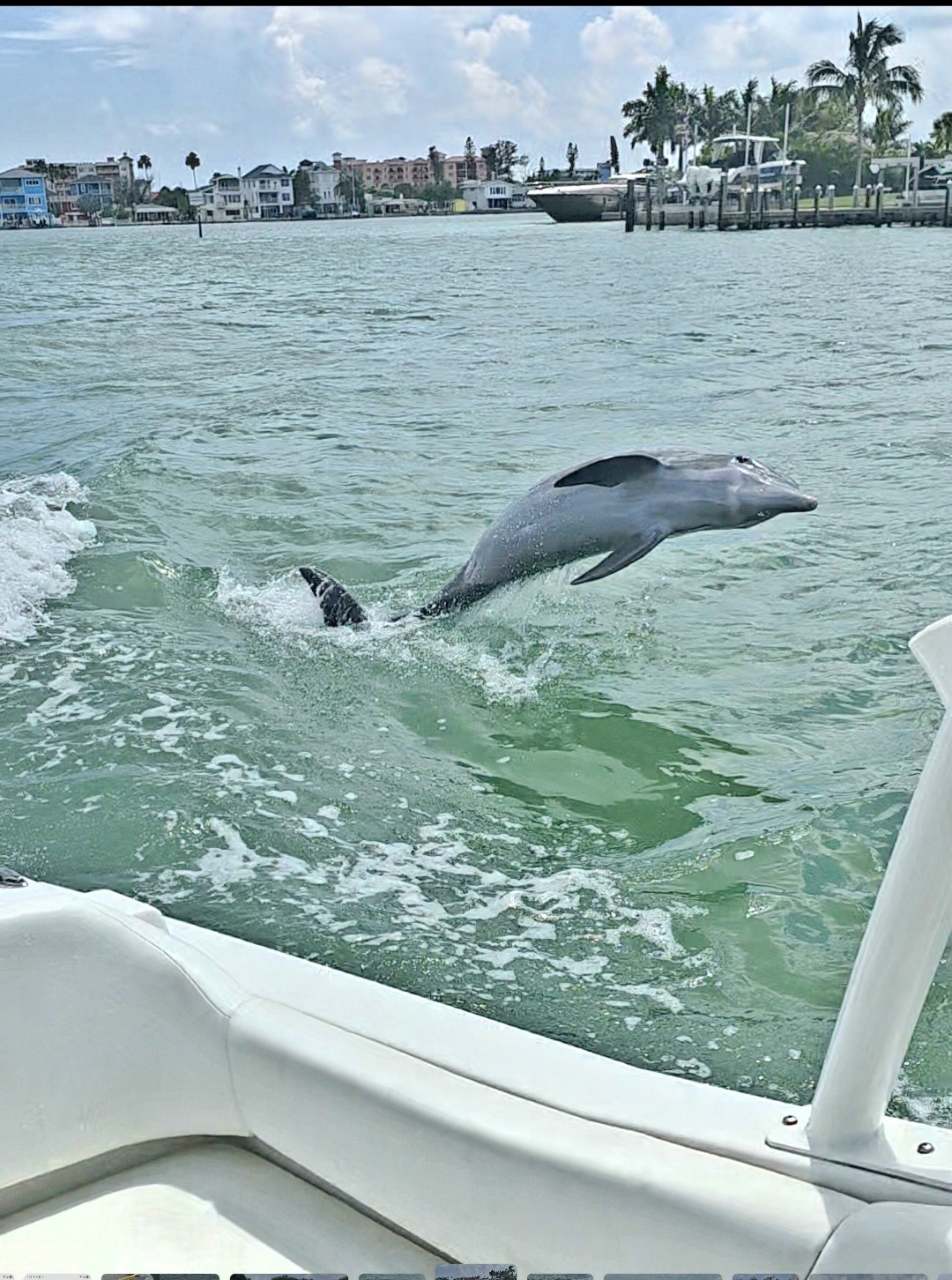
Consistently active water. And this is not a stretch where you glimpse a fin and call it a sighting — dolphins through here jump.
Caladesi, Honeymoon, Three Rooker, and Anclote all have passes and flats where dolphins forage. The stretch between the islands tends to produce, particularly on a moving tide.
Every charter is different. Here is what guests reasonably might see.
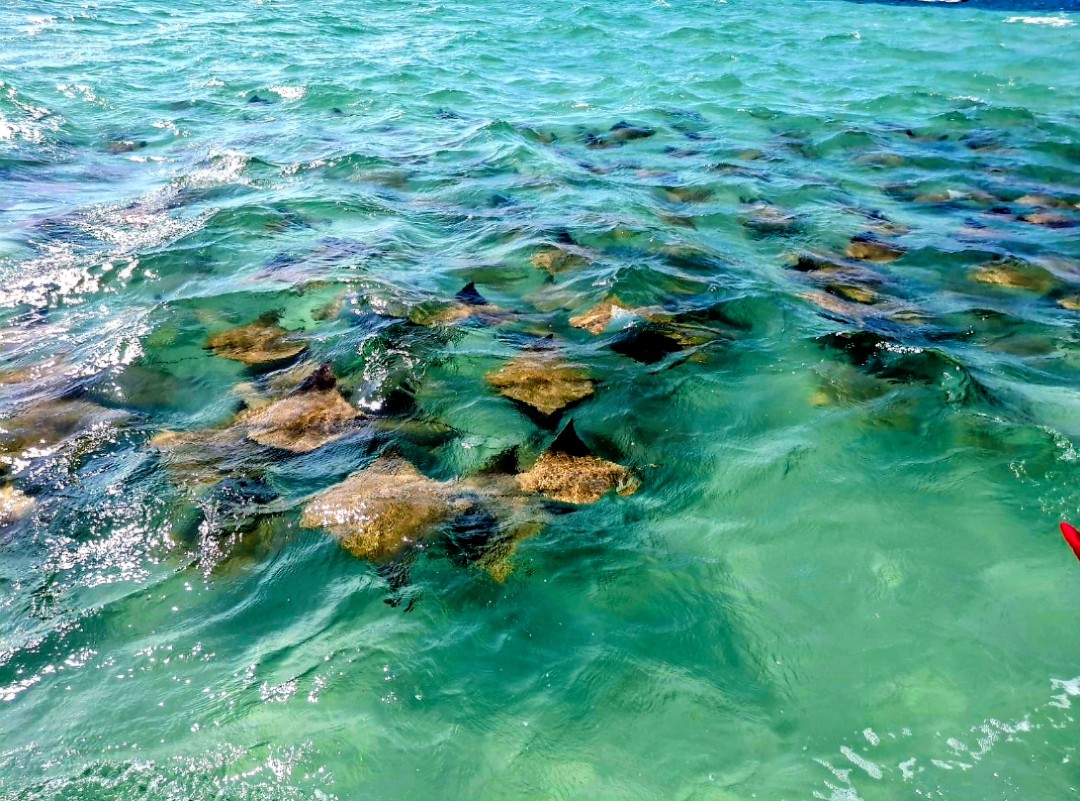
Rays glide over the shallow flats near sandbars year-round. The one worth watching for is the cownose ray migration on the St. Pete side — not one or two, but a moving formation of them travelling together just under the surface. It is a migration, so nobody controls the timing, but that is the stretch of water where it happens.
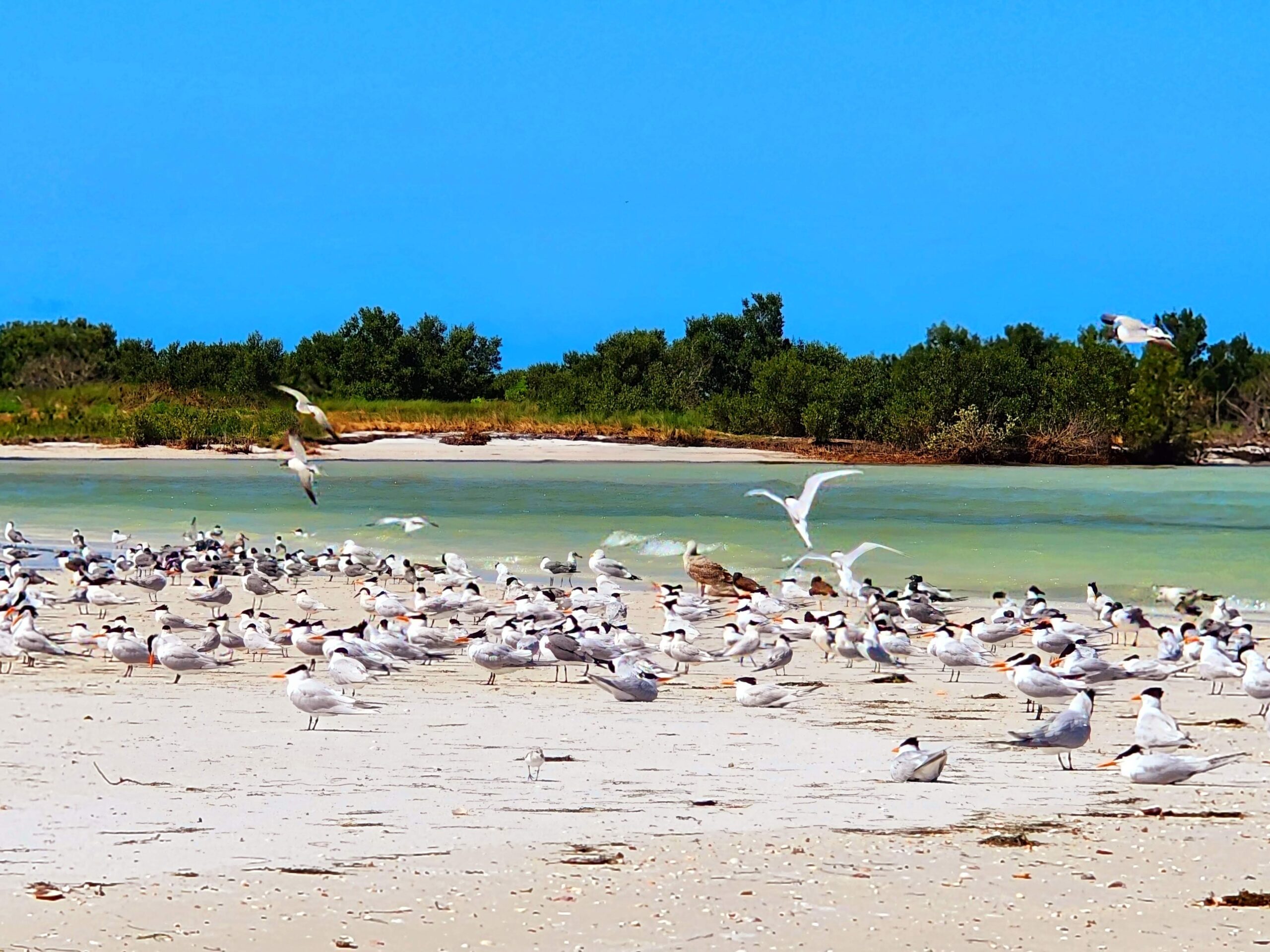
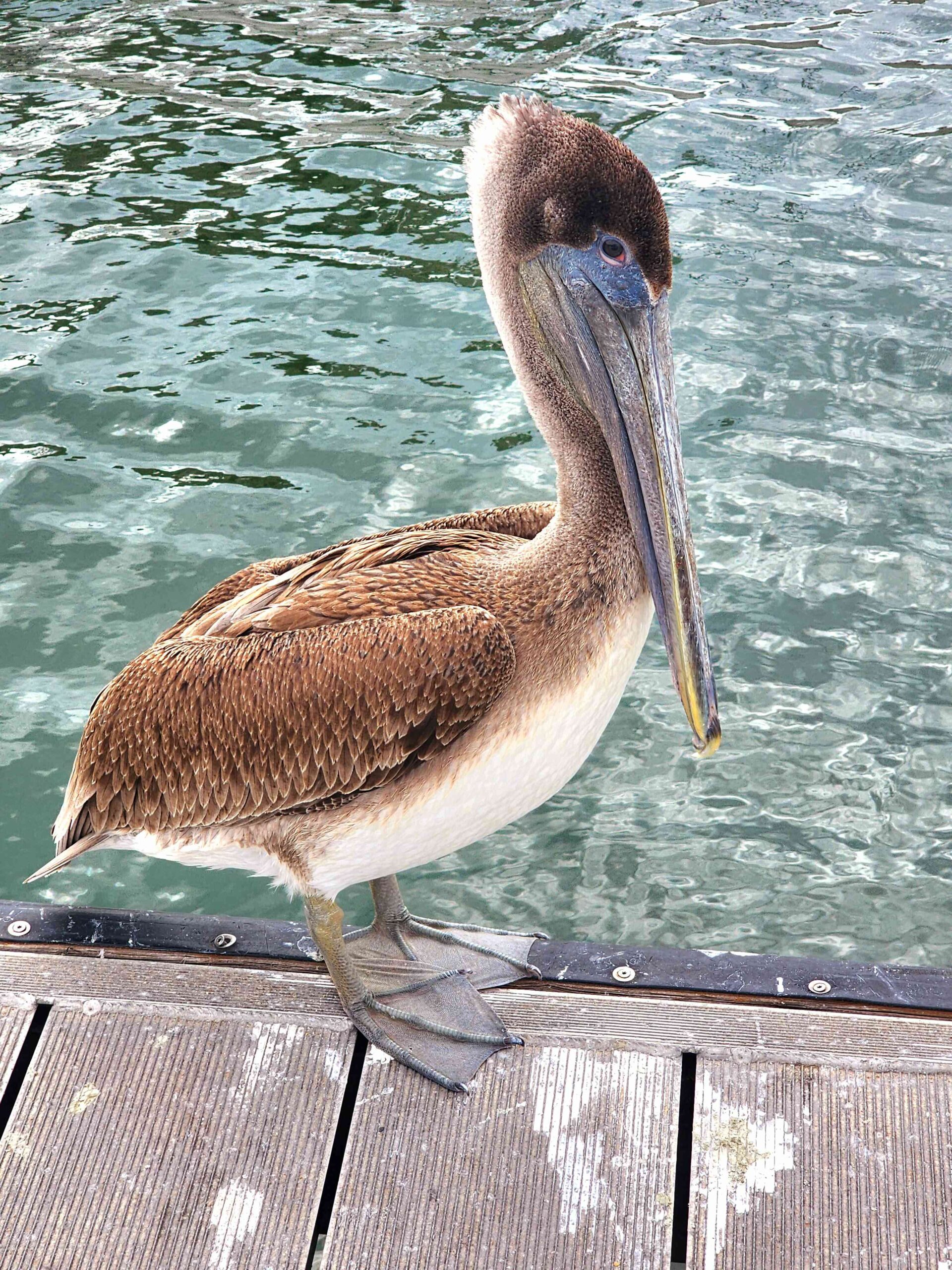
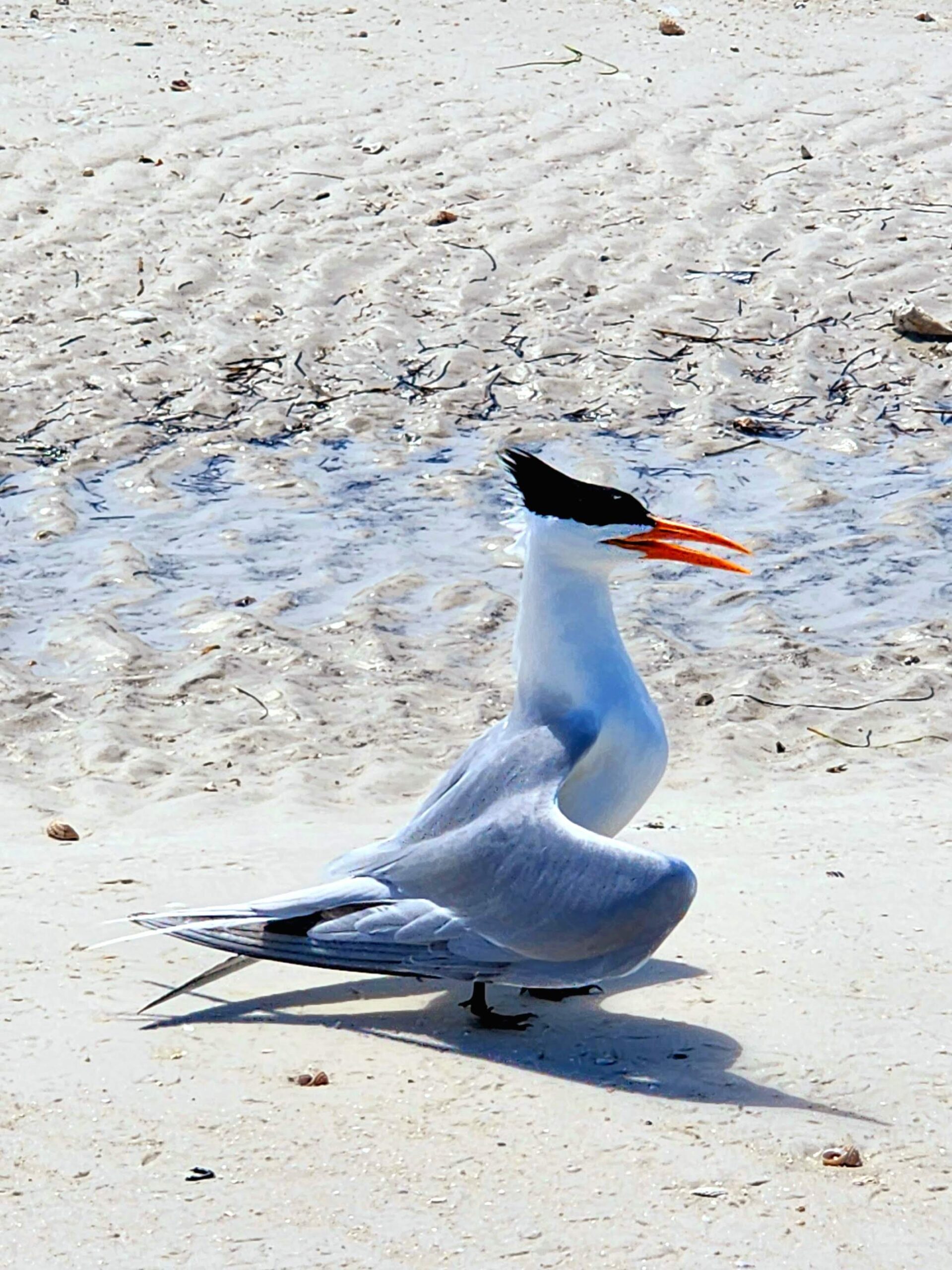
Pelicans, terns, gulls, osprey, herons, and egrets work these shorelines constantly. Three Rooker Island has a rookery whose sound carries across the water before you can see it, and the undeveloped islands hold birds in numbers you will not see from a public beach.
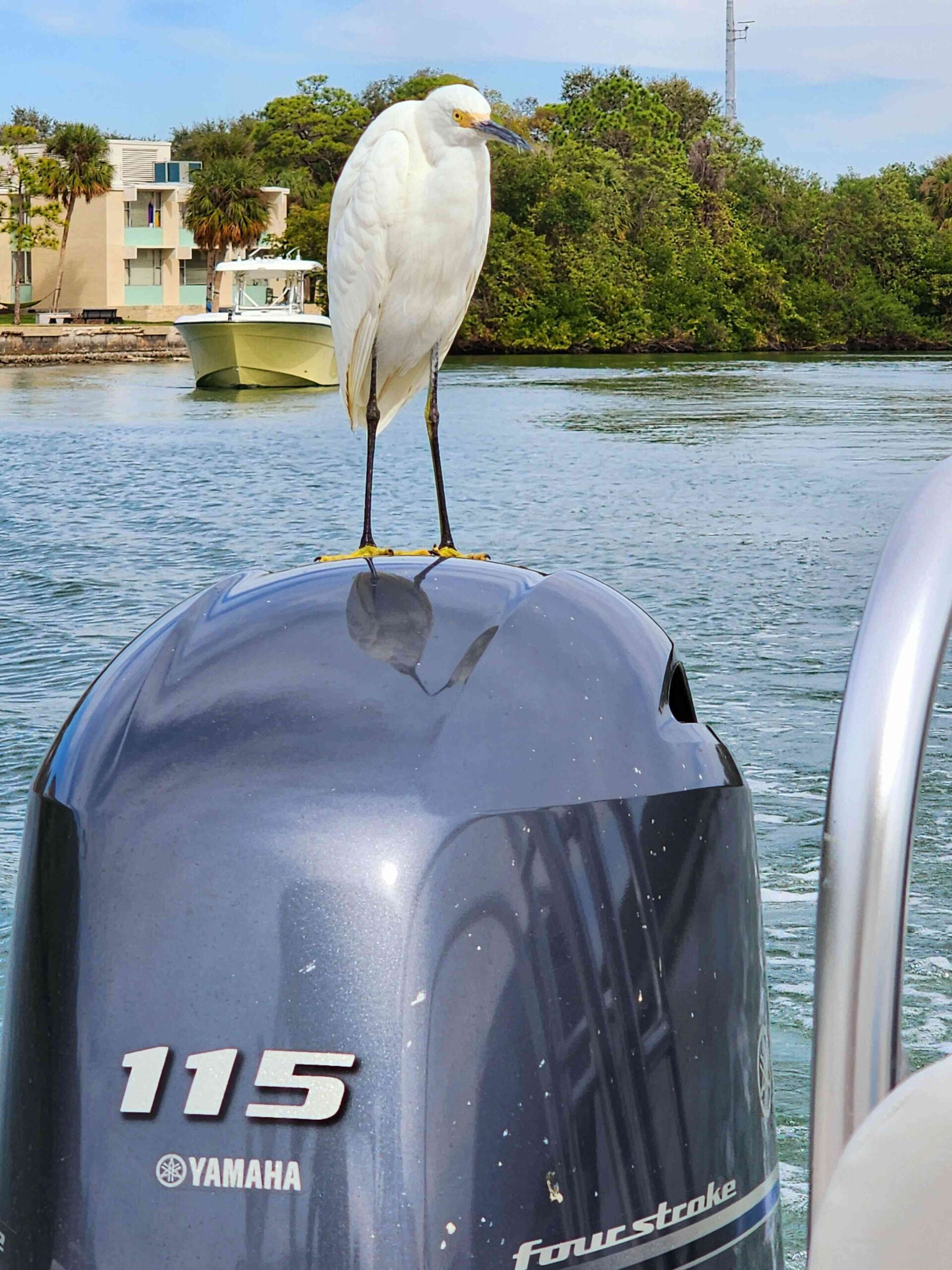
The snowy egret is the one worth knowing by sight — bright white, slender black bill, a patch of yellow around the eye, blackish legs, and unmistakable yellow feet. When they are alert, the wispy plumes on the back of the head stand up.
Those yellow feet are not decoration. Snowy egrets shuffle and wiggle them underwater to stir small fish and shrimp out of the bottom, then strike. Watch one hunting a shallow flat and you can see it happen.
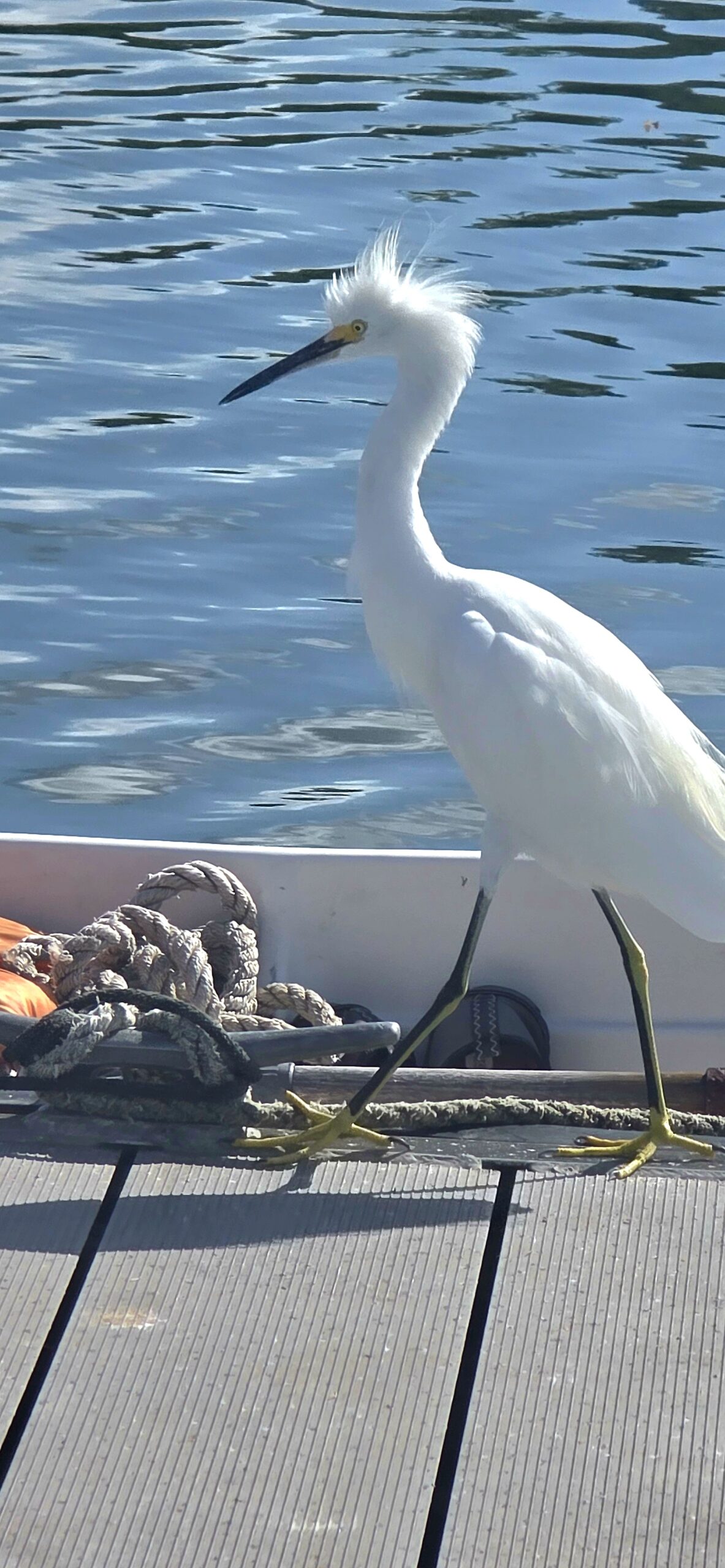
Occasionally one decides you look like a better option than flying.
Some of the best moments on a charter happen looking down rather than out. The shallows here hold more than most people expect, and Captain Keith — a former Navy diver — tends to spot it before anyone else does.
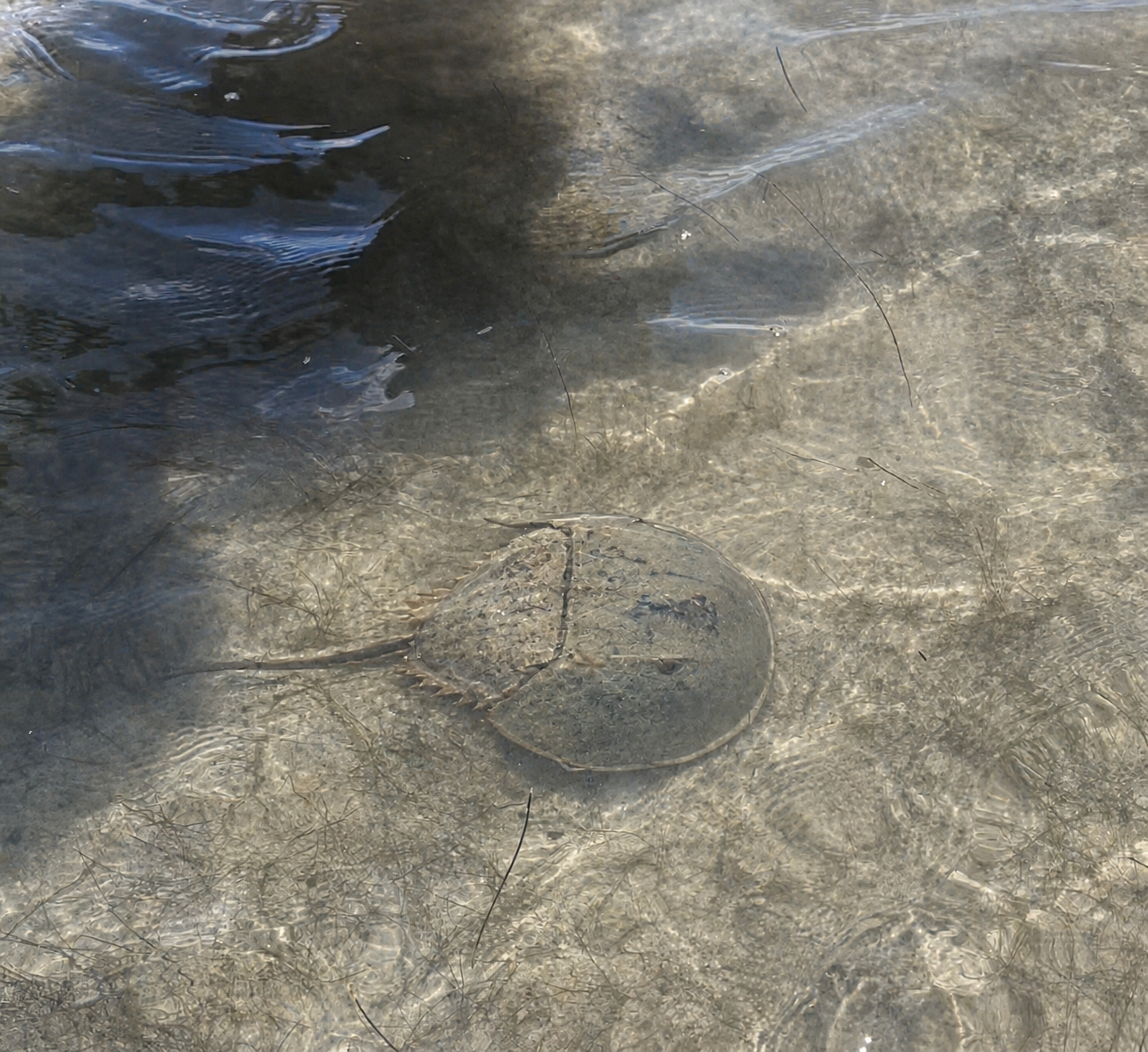
Horseshoe crabs turn up too, and they are worth stopping for. They are not crabs at all — they are more closely related to spiders and scorpions, and the design has barely changed in something like 450 million years, which makes them older than dinosaurs by a wide margin. Their blue blood is still used in medical testing to screen for bacterial contamination, a detail Captain Keith the cardiac nurse enjoys rather more than most people would.
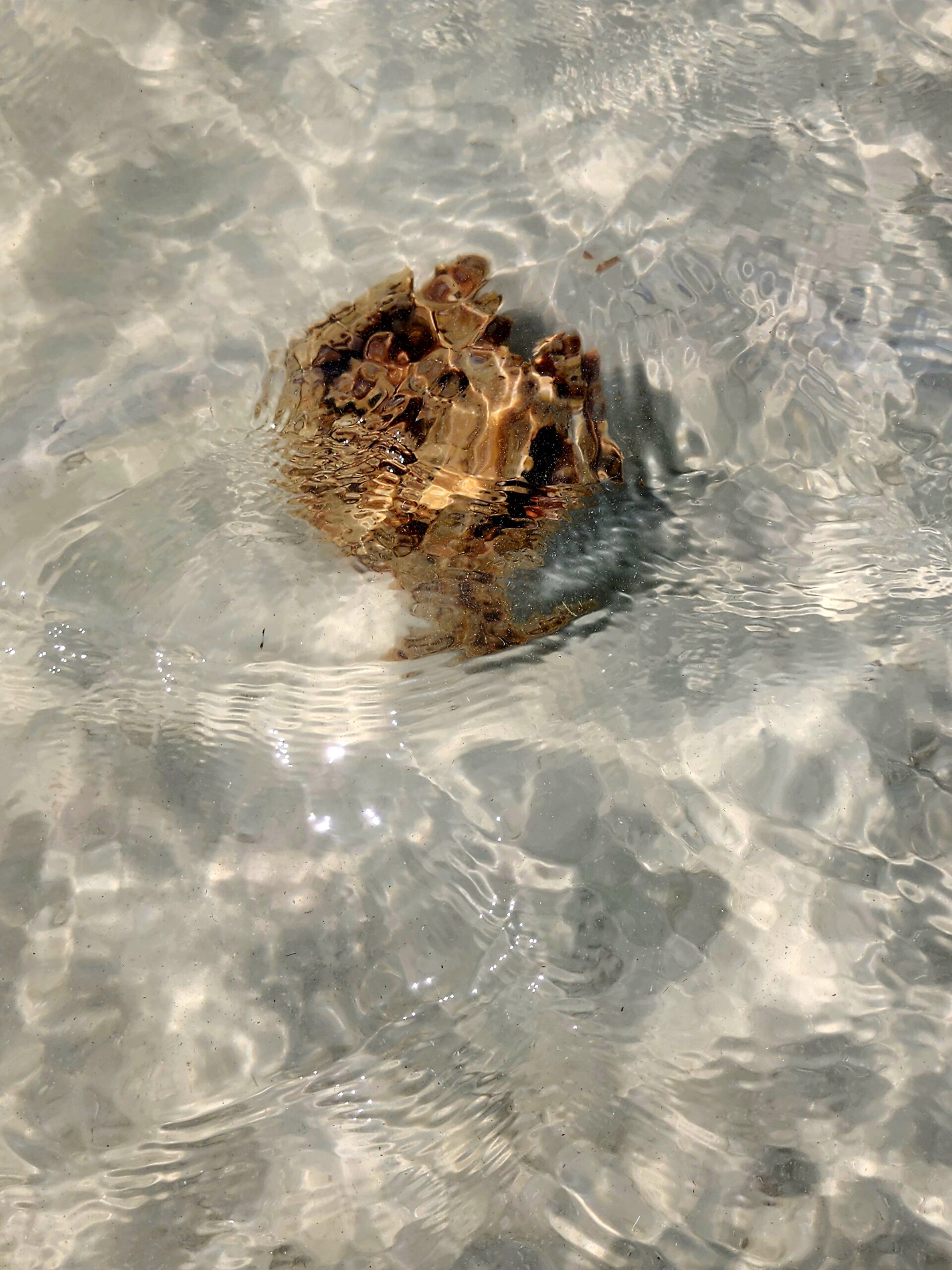
Sponges wash up and turn up on the bottom out here too, and they are a bigger part of this coastline’s story than they look. Tarpon Springs, just north of Anclote Key, was built on sponge diving — Greek divers settled there in the early 1900s and it became the sponge capital of the country. The sponges we come across are the same industry’s wild relatives, still growing on the bottom a few miles from where all that happened.
Manatees are the one nobody photographs well, including us. They spend most of their time submerged, so what you usually get is a dark shape drifting under the surface and a snout coming up for air — which is genuinely lovely in person and impossible to capture. We would rather tell you that than show you someone else’s stock photo.

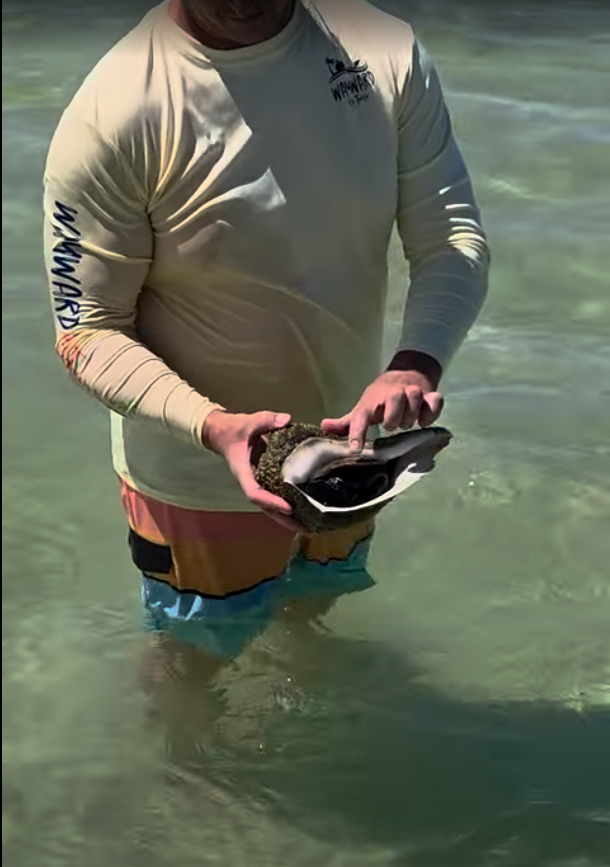
A live sand dollar is dark and slightly fuzzy, not the bleached white disc you find in a gift shop — that is the skeleton of a dead one. Live ones stay in the water. Guests are welcome to hold one for a moment and then put it back exactly where it was.
An honest note on wildlife. These are wild animals in open water. We will not tell you what you are going to see, because we do not know. What we can tell you is where they feed, when they are most active, and how to be in the right place at the right time.
If any operator guarantees you dolphins, they are telling you something they cannot know.
The honest answer, how often it happens, and why no one can promise wildlife.
Read the guide →Season by season, plus the time of day that consistently produces the most activity.
See the timing guide →Where they congregate, how they behave, and what the law requires of any legal operator.
Read more →The straight answer about what is in these waters, and why it is not the thing to worry about.
Read the answer →We follow federal marine mammal guidelines on every charter. We do not chase dolphins, herd them, cut across their path, or approach manatees closely. Swimming with wild dolphins is not permitted under the Marine Mammal Protection Act, and any operator offering it is either misleading you or breaking the law. Dolphins may choose to come to the boat on their own — that is a different thing, and it is the good version.
The other kind of watching: when guests are in the water, Captain Keith is on watch. Eleven years as a Navy submariner leaves you with the habit. A manatee drifting under the anchor line, a current picking up, a boat coming in faster than it should. He is also a former Navy diver and a cardiac registered nurse. Six guests is about the number one person can genuinely keep track of, which is part of why we cap it there.
Dolphins are year-round residents. Everything else shifts.
Comfortable temperatures, calm water, and very active marine life. Excellent water clarity, high dolphin activity, and manatees still around before they move off.
Warm water and long days. Dolphins very active and sea turtle nesting season is underway. Book a morning departure — afternoon thunderstorms are common.
Crowds thin out, temperatures drop, and the wildlife stays active. Fewer boats on the water and good visibility. Arguably the best all-round season.
Quiet and uncrowded. Dolphins are still here, and manatees gather in warmer inlets. A cool day also makes a good sightseeing run if nobody wants to swim.
Two departure points, two genuinely different days.
Caladesi Island, Honeymoon Island, Three Rooker with its bird rookery, and Anclote Key. Passes and flats between the islands where dolphins forage.
See the Clearwater guide →Egmont Key, Fort De Soto, Shell Key, the mangrove waterway through Boca Ciega Bay, and the Skyway where dolphins surf the ship wakes.
See St. Pete charters →All rates flat, for the whole boat, up to 6 guests.
2.5 hours · up to 6 guests
Sightseeing on the way out, dolphins along the Intracoastal or the mangrove edges, and a nearby sandbar stop. The full mix, closer in.
4 hours · up to 6 guests · most popular
The range to reach the barrier islands and stay a while. Combine dolphin watching with island stops, shelling, and snorkeling.
2.5 hours · up to 6 guests
Dolphins are often active as the light goes, and flat evening water makes them easier to spot. You pick the backdrop, and champagne flutes come at sundown.
The Gulf’s sassiest sea turtle, and our reason for talking about this water the way we do.
Before Wayward Key Tours existed, Captain Keith and Dede were out on the Gulf on their jet skis, frustrated they hadn’t spotted any marine life. Even the laughing gulls sounded like they were mocking them. Then a head popped up out of the water.
She was floating on her shell, catching rays in the current. She laughed at their shyness and said — “This is Florida.” When they asked why they couldn’t find any marine life, she told them they were looking in all the wrong spots, and offered to show them where her friends hang out.
And the real ones do turn up. Not often, and never on schedule, but they are out here.
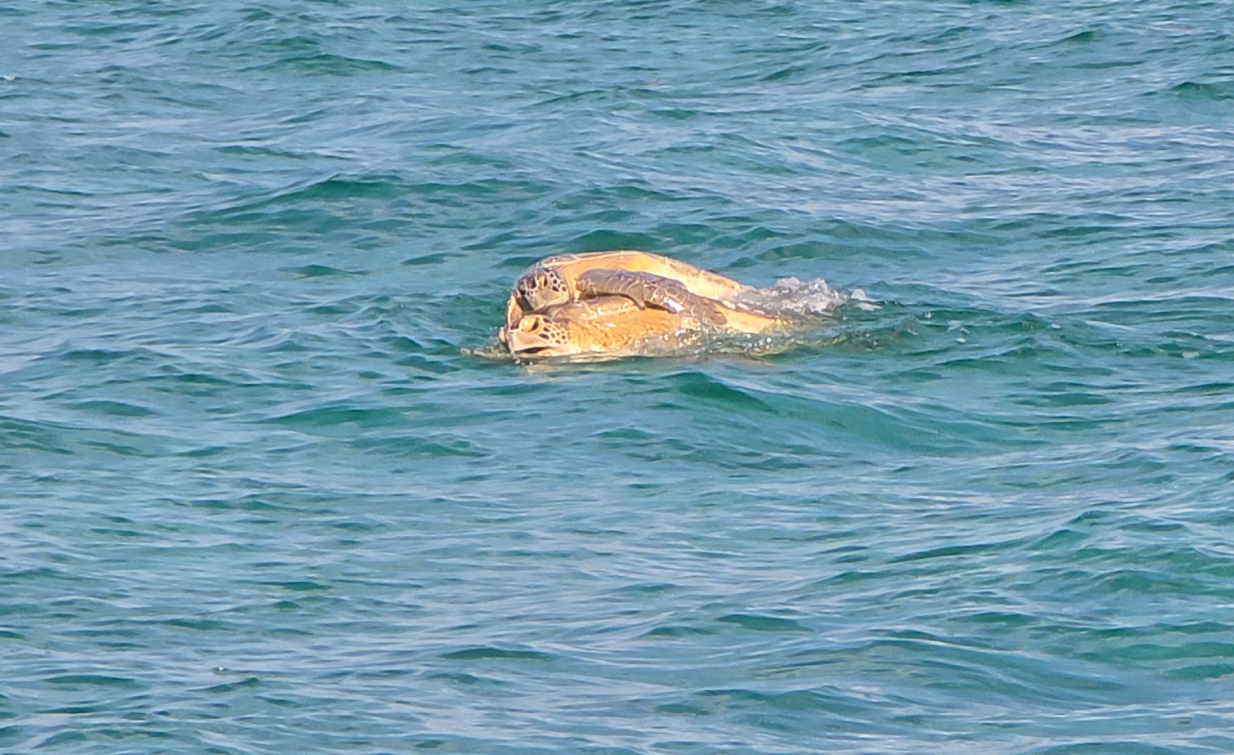
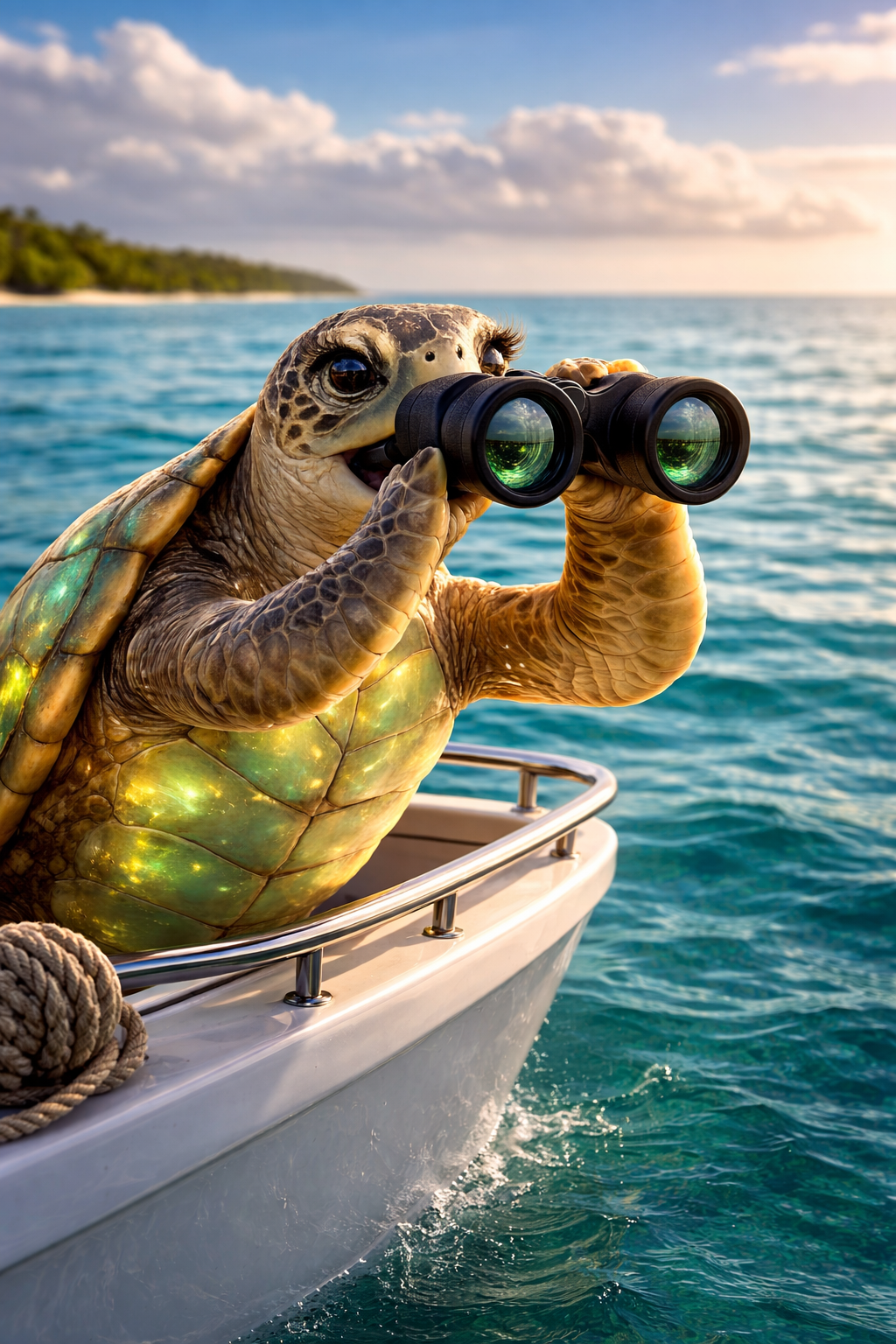
Tessa is how we talk to guests — especially kids — about keeping this water healthy without turning a good day into a lecture. Balloons and plastic bags look like jellyfish to a sea turtle. If a family leaves knowing why that matters, that is worth as much to us as the photos.
Dolphins are wild animals, so no honest operator guarantees a sighting. That said, the bottlenose dolphins here are a resident population rather than a migratory one — they live in these waters year-round. Most charters do see them. Captain Keith knows which mangrove edges, channels, and passes hold fish, which is where the dolphins tend to be working.
All rates are flat, for the whole boat, up to 6 guests. The Gulf Escape is $395 for 2.5 hours. The Half-Day Island Escape is $575 for 4 hours. The Sunset Escape is $425 for 2.5 hours with champagne flutes included. There are no per-guest add-ons and no hidden fees.
Because that is where the food is. Mangrove root systems shelter enormous numbers of small fish, and dolphins work that edge deliberately. Slowing down along a mangrove shoreline is one of the more reliable ways to see them close in — it is not luck so much as knowing where they hunt.
Yes, and it is the best dolphin viewing on the St. Petersburg side. Cruise ships, freighters, and loaded barges pass under the Sunshine Skyway throwing enormous wakes, and dolphins come in to ride them — jumping in front of the bow as the ship moves through. It is not something you can schedule, but it is worth knowing to watch for.
Bottlenose dolphins are naturally curious and sometimes surface right beside the boat on their own. Other times they are seen from a respectful distance. We follow federal marine mammal guidelines — we never chase, herd, or pursue them. The dolphin decides how close the encounter gets, not the captain.
No. Swimming with wild dolphins is not permitted under the Marine Mammal Protection Act, and it is harmful to both people and the animals. Any operator offering it is either misleading you or breaking the law. Dolphins may choose to swim near the boat on their own, which is a different thing entirely.
Yes, for children 5 and up, which is our minimum age due to USCG Type I life vest requirements. The boat has an enclosed restroom, the pace is relaxed, and Captain Keith stays on watch whenever guests are in the water. Tessa is a hit with younger guests too.
Depending on season and conditions: manatees in calm inlets and seagrass flats, rays gliding over the shallows, sea turtles near the sandbars, and shorebirds throughout — pelicans, terns, osprey, herons. On the St. Pete side, cownose rays migrate through in large schools, which is a genuine spectacle when the timing works out.
Often, yes. Dolphins tend to be active as the light goes, and the water is usually flatter in the evening than it is midday, which makes them considerably easier to spot. It is not a guarantee — nothing with wildlife is — but a sunset charter puts you on the water at a good hour for it.
Yes — live sponges grow on the bottom here and sometimes wash up. It is a bigger part of this coastline’s history than most visitors realise: Tarpon Springs, just north of Anclote Key, was built on sponge diving after Greek divers settled there in the early 1900s, and it became the sponge capital of the United States. The sponges we come across are wild relatives of that same trade.
Sometimes, in the shallows. They are worth stopping for — despite the name they are not crabs at all, but closer relatives of spiders and scorpions, and the body plan has barely changed in roughly 450 million years, which makes them considerably older than dinosaurs. Their blue blood is still used in medical testing to screen for bacterial contamination.
Sometimes, in calm inlets and over seagrass flats, and more often in cooler months when they seek warmer water. Fair warning: manatees spend most of their time submerged, so a sighting usually means a dark shape drifting below the surface and a snout coming up to breathe. It is lovely in person and almost impossible to photograph. We will not promise them.
A live sand dollar is dark — usually brown, grey, or purplish — and slightly fuzzy with tiny moving spines. The bleached white disc people recognise is the skeleton of a dead one. Live ones need to stay in the water. Guests are welcome to hold one for a moment and then place it back exactly where it was found.
Pelicans, terns, gulls, osprey, herons, and egrets are all common along these shorelines. Three Rooker Island has a rookery you can hear across the water before you see it, and the undeveloped barrier islands hold birds in numbers you will not find on a public beach. Snowy egrets are worth spotting — bright white with a slender black bill and vivid yellow feet, which they shuffle underwater to stir up small fish and shrimp before striking. Every so often a bird lands on the boat and rides along for a while, entirely of its own accord.
Dolphins are here year-round because the population is resident, not migratory. Spring and fall bring calm water and very active marine life. Summer is warm with long days — book a morning departure to stay ahead of afternoon storms. Winter is quiet and uncrowded, and the dolphins are still out there.
Yes, and most groups do. Dolphin watching pairs naturally with a sandbar swim, shelling, island hopping, or a sunset run. Nothing on our charters is a fixed package — you tell us what sounds good and Captain Keith builds the route around it.
Two locations. Clearwater departures reach Caladesi Island, Honeymoon Island, Three Rooker, and Anclote Key. Maximo Park in St. Petersburg reaches Egmont Key, Fort De Soto, Shell Key, and the Skyway. Captain Keith confirms your meeting point when the booking is confirmed.
Yes — an enclosed restroom on our 23-foot WorldCat catamaran, which makes longer trips comfortable for families with kids and older guests. There is also a freshwater rinse wand and a deck sink.
Tell us what sounds good — dolphins along the mangroves, a sandbar swim, the Skyway at ship traffic, or a bit of everything. Captain Keith builds the route from there.
Gulf Escape
$395
2.5 hours · up to 6
Half-Day Island Escape
$575
4 hours · up to 6
Sunset Escape
$425
2.5 hours · champagne included