
Clearwater & St. Petersburg, Florida
Are There Sharks in Clearwater?
Yes. There always have been, and that's a sign of healthy water rather than a reason to stay out of it. Here's what's actually swimming around out there, from a captain who's spent years in it.
The short answer
Sharks live in the waters around Clearwater and St. Petersburg year-round. The ones you're most likely to encounter inshore are blacktip and nurse sharks, neither considered aggressive toward people under normal circumstances. Bull sharks and the occasional hammerhead are also present. Unprovoked bites are extremely rare here despite millions of swimmers every year. The one precaution worth taking is simple: don't wear shiny jewelry in the water, because it flashes like baitfish.
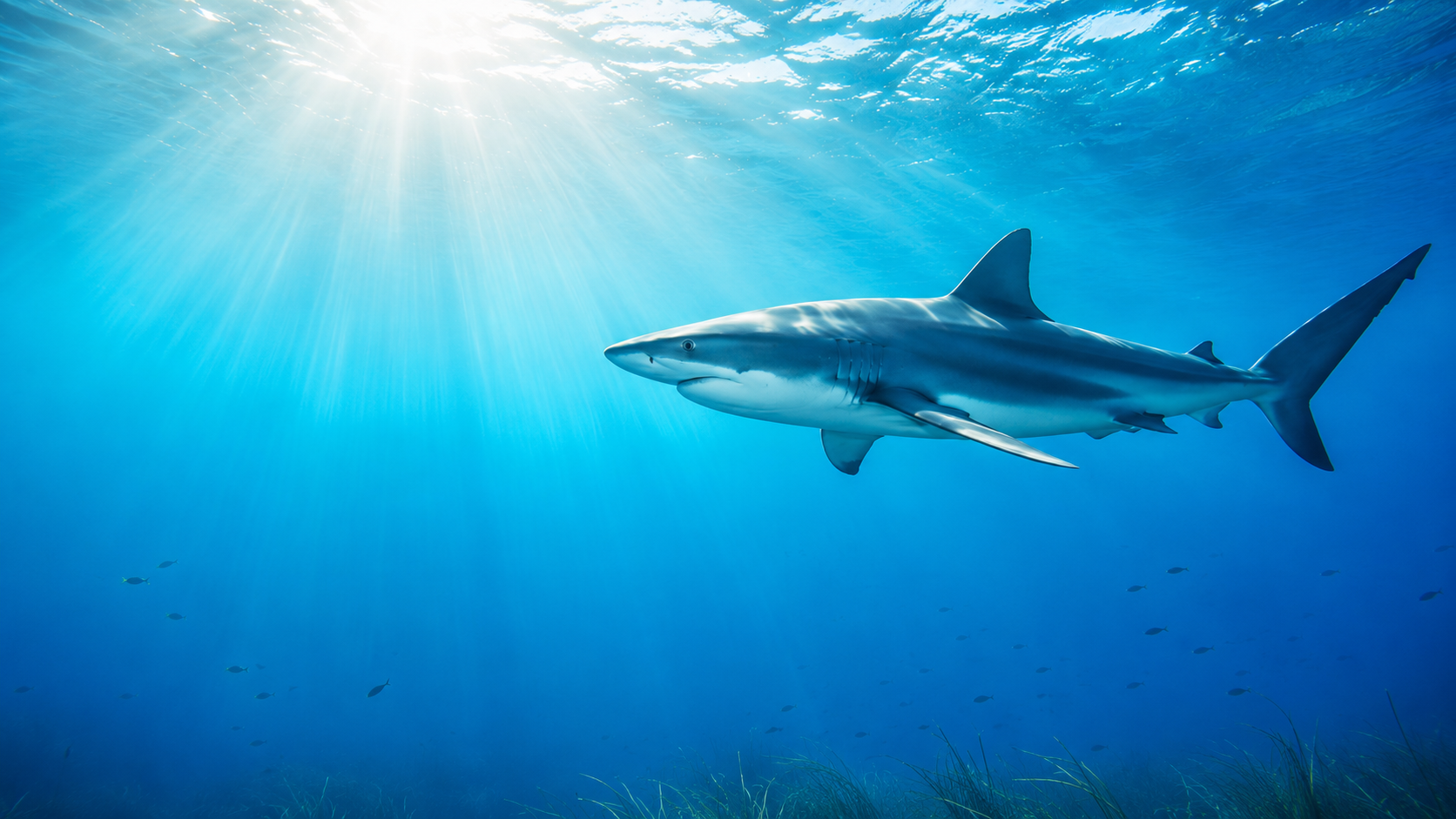
What's actually out there
Four species you might realistically encounter.
Blacktip
Most common inshore
Small, fast, and skittish. They feed on baitfish in the shallows and generally want nothing to do with people. If you see a shark near a Clearwater sandbar, this is probably it.
Nurse shark
Bottom dweller
Slow, docile, and usually found resting on the bottom or tucked under structure. About as close to a placid shark as the ocean offers.
Bull shark
Present, rarely seen
Larger and more capable, and tolerant of brackish water so they range into passes and channels. Encounters with swimmers here are uncommon.
Hammerhead
Occasional visitor
Unmistakable and genuinely impressive. Not something you see often, and the sighting tends to be the story of the trip.
What we've actually seen
Two encounters worth telling you about.
The hammerhead
Captain Keith and Dede came across a hammerhead with a dorsal fin big enough that it's hard to describe without sounding like an exaggeration. Seeing one in the wild — the size, the shape, the sheer presence of it — is something that stays with you. It was remarkable, not frightening.
The one that veered off
On another day, in the water near their jet skis, a shark came in their direction. Then it simply changed course and went around them, with no apparent interest in the people floating there at all.
That moment captures the thing most people never quite absorb: sharks aren't hunting humans. They're navigating an environment they live in. This one had somewhere else to be and adjusted accordingly.
Captain Keith is a former Navy diver, so he's spent a great deal of time in water with things in it. That background is why the guidance here is calm and specific rather than either dismissive or dramatic.
The precautions that actually matter
Not a long list, because it doesn't need to be.
- Take off shiny jewelry. Rings, bracelets, watches, necklaces. Flashing metal looks like the flicker of baitfish to a shark or barracuda. This is the single most useful thing on this list.
- Skip dawn and dusk swims. That's when many species feed most actively and when visibility is poorest.
- Stay out of murky water. Poor visibility means an animal can't identify what it's looking at, and that's when mistakes happen.
- Don't swim near active fishing. Bait, chum, and struggling hooked fish are exactly what draws predators in.
- If asked to come in, come in calmly. No panic, no thrashing. Steady swimming attracts far less attention than splashing does.
Barracuda, and the shiny jewelry rule again
Barracuda are also out here. Like sharks, they're part of the ecosystem and not typically aggressive toward people — but they're notably attracted to bright, reflective objects. The jewelry advice applies doubly to them.
They tend to hover, watch, and follow at a distance, which can feel unnerving if you don't know that's just what they do. It isn't stalking behavior. It's curiosity.
The things people worry about second
Once sharks stop being the question, these usually come up.
Stingrays — and the shuffle
Rays are far more likely to affect your day than a shark, and the fix is easy. When you're wading in shallow sand, slide your feet along the bottom instead of stepping down. Rays bury themselves in sand and sting only when stepped on directly. Shuffling nudges them out of the way harmlessly.
It's called the stingray shuffle, every Gulf Coast local knows it, and it takes about four seconds to learn. Southern stingrays and cownose rays are common over the sandy flats — and watching one glide past while you're snorkeling is one of the better moments out here.
Jellyfish
Present seasonally rather than constantly. Captain Keith checks conditions before every swimming stop and will tell your group if there are enough around to be worth avoiding. If so, we simply move somewhere else — one of the advantages of not being locked into a fixed route.
Dolphins
Worth mentioning because people occasionally confuse a dorsal fin at distance. Dolphins surface to breathe in a smooth rolling motion and usually travel in groups; sharks don't. If you see fins moving together in rhythm, that's almost certainly a pod of dolphins, and it's a good day.
Want to see the data yourself?
OCEARCH runs a public shark tracker — a research nonprofit that tags sharks and publishes their pings live on a map. It's genuinely fascinating and worth a look.
One important thing to understand before you open it, though. OCEARCH tags large offshore sharks: white sharks, tigers, makos. Those are open-ocean animals, and their pings show up across enormous stretches of water. They are not what's swimming around the shallow sandbar you'll be standing in.
The sharks in the inshore waters where our guests actually swim are blacktips and nurse sharks — small, skittish, bottom-dwelling animals that want nothing to do with you. Two different worlds, and it's worth knowing which one you're looking at.
If you're asking because of your kids
Most people who search this question are parents deciding whether a boat day is a good idea. So, directly: yes, it is.
A private charter is actually the more controlled option compared to a public beach. Your group is the only group. Captain Keith and Dede watch the water the entire time anyone is swimming — not a lifeguard covering half a mile of shoreline, but two people watching your specific children. If anything warrants attention, everyone comes in calmly and we move on to somewhere else.
Minimum age onboard is 5, which is a USCG requirement tied to life vest sizing rather than a preference of ours.
Our honest position
Sharks live here. They belong here. Occasionally you'll see one, and when you do from the deck of a boat, it's genuinely thrilling rather than alarming.
We'd rather tell you plainly what's in the water than pretend the Gulf is a swimming pool. Guests who know what to expect enjoy the day more, not less — and in years on this water, the encounters have been remarkable to witness rather than dangerous.
Planning your day on the water
What to bring
Sunscreen, hat, towels, water shoes — and leave the jewelry in the hotel safe.
Best sandbars
Shallow, clear water where you can see the bottom the whole time you're in it.
Snorkeling honestly
No coral reefs here — what you'll actually see, and the best months for it.
When to visit
Month by month — water temperature, crowds, weather, and wildlife activity.
Sandbar charters
Knee-deep turquoise water with a Sunchill float and nobody else around.
Everything else
The full FAQ — booking, weather, what's included, and how the day works.
Or see the bigger picture: things to do on the water in Clearwater and near St. Pete Beach.
Common questions
Are there sharks in Clearwater Beach?
Yes. Sharks live in the Gulf waters around Clearwater year-round. The species you're most likely to encounter inshore are blacktip and nurse sharks, neither of which is considered aggressive toward people. Bull sharks and hammerheads are present but seen far less often.
Have there been shark attacks in Clearwater, Florida?
Unprovoked bites are extremely rare in these waters. Millions of people swim, snorkel, and boat here every year without incident. Basic precautions — no shiny jewelry, avoiding dawn and dusk, staying out of murky water and away from active fishing — reduce what is already a very small risk.
Why shouldn't I wear jewelry in the water?
Shiny metal catches light in a way that closely resembles the flash of baitfish scales. That's attractive to both sharks and barracuda. Taking off rings, bracelets, watches, and necklaces before you swim is the single most useful precaution on this coast.
What happens if a shark is spotted while we're swimming?
Captain Keith or Dede will calmly ask everyone to return to the boat. The instruction is simply to come in steadily and without panic — thrashing draws far more attention than a calm swim does. Then we move to a different spot and carry on with the day.
Is it safe for kids to swim on a Clearwater boat charter?
Yes. On a private charter your group is the only group, and both Captain Keith and Dede watch the water the entire time anyone is swimming. Minimum age onboard is 5, per USCG life vest requirements.
What is the stingray shuffle?
Sliding your feet along the sandy bottom instead of stepping down when you're wading in shallow water. Rays bury themselves in sand and only sting when stepped on directly, so shuffling nudges them safely out of the way. It's standard practice on this coast and takes seconds to learn.
Can I track sharks near Clearwater?
OCEARCH publishes a live public tracker showing pings from sharks they've tagged. It's worth knowing that they tag large offshore species — white sharks, tigers, makos — rather than the small blacktips and nurse sharks found in the shallow inshore waters where people swim. It's interesting data, but it isn't a picture of what's near the sandbars.
Should sharks stop me from swimming in Clearwater?
No. Sightings are occasional rather than routine, and when they happen they tend to be the highlight guests talk about afterward. Seeing a shark in the wild from the safety of a boat is thrilling. Watching one pass by and lose interest is a reminder of how healthy this ecosystem still is.
Come see it for yourself
Private charters for up to 6 guests from Clearwater and St. Petersburg. Your group only, no fixed route, and two people watching the water the whole time you're in it.
Book your private charter Questions? Call or text 727-355-3717 · contact@waywardkeytours.com