
Clearwater & St. Petersburg, Florida
Private Shelling Charters
The beaches worth shelling are the ones nobody can drive to. No road, no ferry, no day-trippers — so whatever washed in overnight is still sitting there when you arrive.
A private shelling charter takes you to boat-only beaches where the shells have not already been picked over. Shell Key Preserve, Three Rooker, Anclote Key, Caladesi, and Honeymoon Island — reached at the stage of the tide that actually exposes the flats.
Flat rates for the whole boat, up to 6 guests: Gulf Escape $395 (2.5 hrs) · Half-Day Island Escape $575 (4 hrs) · Sunset Escape $425 (2.5 hrs). The 4-hour charter is the one most shelling groups book, because it reaches the islands.
We provide the shell bag. Take empty shells; anything still alive goes back in the water.
Why shelling by boat is different
A public beach with a parking lot gets combed from sunrise. By mid-morning, hundreds of people have walked the same tide line ahead of you, and what is left is what nobody wanted.
Three Rooker has no road and no ferry. Anclote Key is a run north with nothing on it. Shell Key Preserve is undeveloped. Whatever came in overnight at those places is still there — and the only people who see it arrived by boat.
The other half is timing. A falling tide exposes flats and sandbars that were underwater an hour earlier, and that is where the shells sit. Captain Keith plans stops around the tide rather than heading for a fixed spot and hoping.

Where the good shelling is
Which stops we make depends on the departure point and the tide that day.
Shell Key Preserve
Undeveloped, protected, and reached from Maximo Park. Some of the best shelling anywhere in Pinellas County, with calm water and very little traffic.
Read the Shell Key guide →Three Rooker Island
No ferry, no road, no way in but a boat. Some of the least-walked sand on this coast, plus a bird rookery you hear before you see.
Read the Three Rooker guide →Caladesi Island
Regularly ranked among the best beaches in the country, with excellent shelling and noticeably fewer people midweek than anyone expects.
Read the Caladesi guide →Honeymoon Island
Four miles of beach, and the new island that formed off its northern tip in 2024 — which nobody has walked over.
Read the Honeymoon Island guide →Anclote Key at the northern end of the Clearwater range and the sandbars off Fort De Soto are both worth the run too. On a 4-hour charter you can usually work two or three of these into one day.
When to come, and why it matters more than where
Two things decide a shelling day: the tide, and what the weather did in the days before.
The tide window
The productive window is the hour or two around low tide. As the water pulls back it exposes flats and bars that sit underwater most of the day — and that is where shells settle. At high tide the same ground is a couple of feet under the Gulf.
The low-tide time shifts by roughly an hour each day and moves through the lunar cycle, which is why a shelling charter is booked around the tide rather than around a convenient hour. Tell us your dates and Captain Keith will tell you which departure lands in the window.
Winter is the best season, which surprises people
Most visitors assume summer. In fact the cooler months are the most productive stretch of the year for shelling on this coast. Winter cold fronts bring strong onshore wind and churned surf that lift shells off the offshore bars and stack fresh material along the tide line. One front after another keeps restocking the beaches.
It also happens to be when the water is too cool for most people to want to swim — so a shelling charter is a genuinely good reason to be out on a boat in January.
Right after a blow is best of all
The day or two after a storm or a cold front passes is the single best condition for shelling. Wind and waves stir the bottom and push in material that has been sitting offshore, including things that rarely make it to a beach at all. If it has been windy for a day or two, get out.
Morning or evening depends on the season
Low tides fall at different times through the year. In the cooler months the good lows tend to land early, which means a morning charter and a beach nobody has walked yet. In summer they shift later — which is worth knowing, because it means a Sunset Escape in July can put you on an exposed flat in golden light with the tide out. Warm water, low sun, and nobody around.
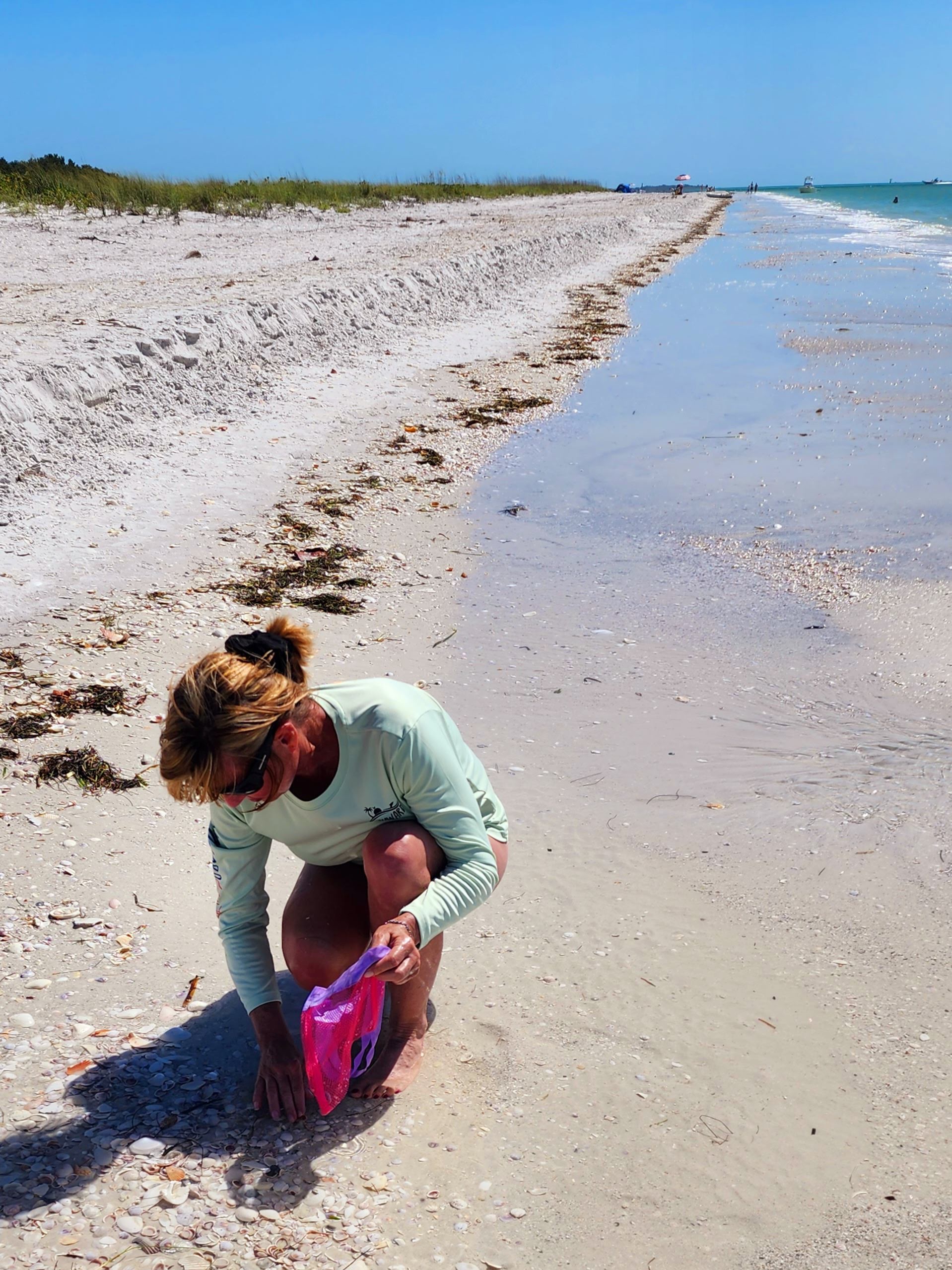
Where to walk once you are there: follow the wrack line — the ridge of seaweed and debris marking where the highest waves stopped. That is where the water drops what it carried in. Then keep walking past where most people stop.
On a boat-only beach that second part is easy, because there is nobody to walk past.
What you will find
It changes with every tide, which is most of the appeal.

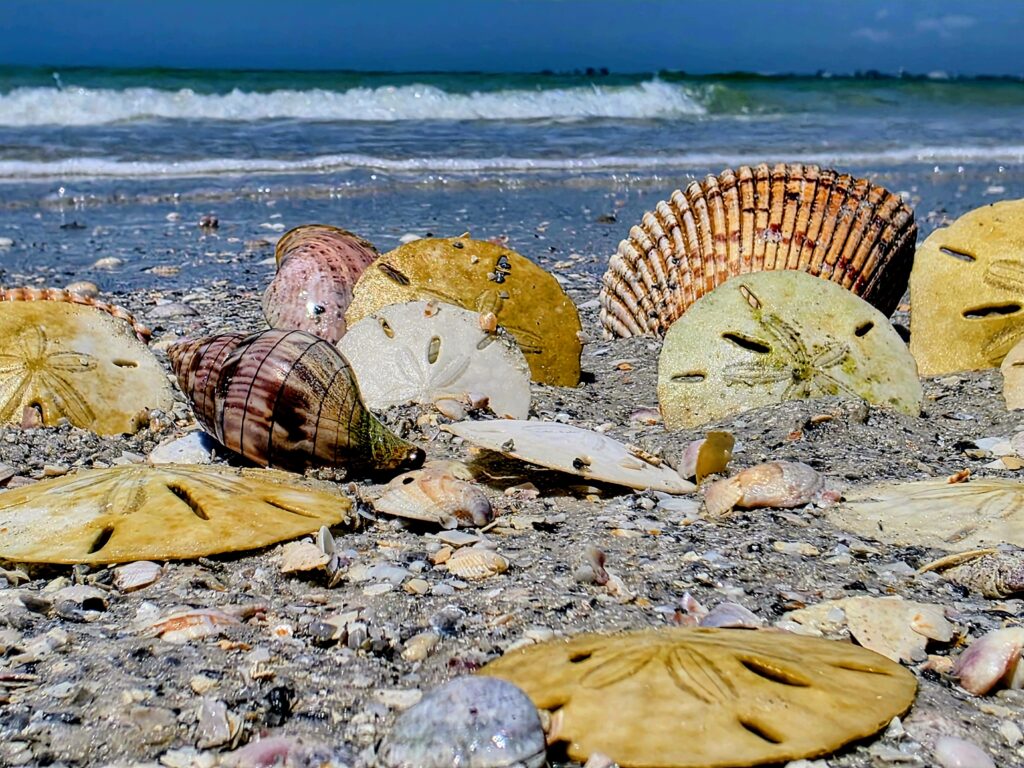
Sand dollars
The one everybody wants. An empty sand dollar is white and smooth. A live one is dark — brown, grey, or purplish — slightly fuzzy with tiny moving spines, and it may leave a yellowish stain on your hand, which is a harmless substance live ones produce and a dead giveaway.
Live sand dollars cannot survive more than a few minutes out of the water. Look, photograph, and put it straight back.

Fighting conchs
Sturdy spiral shells, common in the shallow flats and sandy bottoms here. Despite the name they are not dangerous. Live ones are surprisingly heavy and move more than people expect — watching one make its way across the bottom is worth more than putting it in a bag.
Pen shells
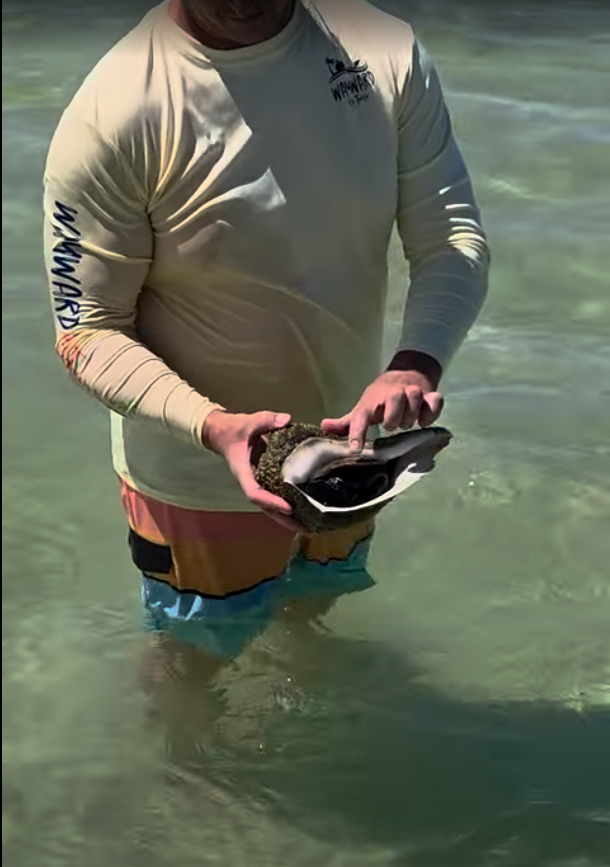
Dark and rough on the outside, and easy to walk past. Turn one over and the interior can shimmer with pearl, blue, pink, purple, and gold. They are the shell guests are most often surprised by.

Scallops, cockles, whelks and olives
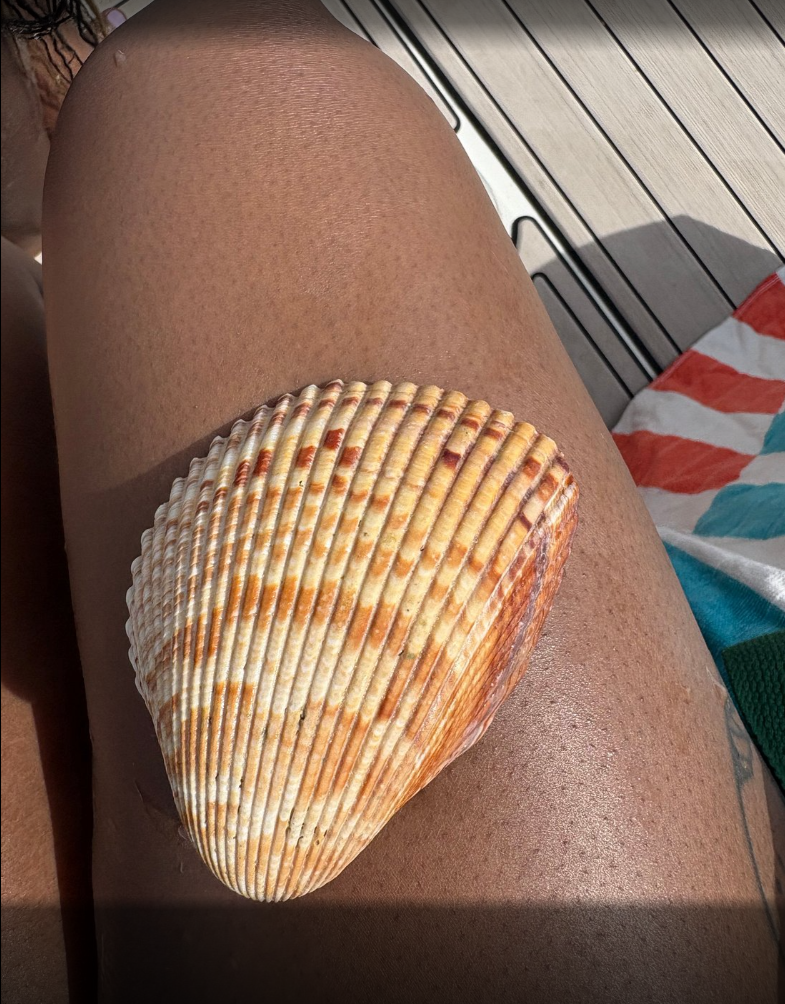
Fan-shaped scallops and cockles in the full range of Gulf Coast colours, plus whelks and the small glossy olive shells that turn up on the flats. Live bay scallops are regulated and may only be harvested during official Florida scallop season.
One safety note: handle cone shells carefully if you find a live one. Some cone species can deliver a painful sting. Empty ones are perfectly safe, and it is another good reason for the take-empties-only rule.
And the things that are not shells
Sea sponges wash up out here — Tarpon Springs, just north of Anclote Key, was built on the sponge trade after Greek divers settled there in the early 1900s, and what you find is a wild relative of that same industry. Horseshoe crabs turn up in the shallows and are worth stopping for: not crabs at all, closer to spiders, and essentially unchanged for something like 450 million years.
What you can legally take home
Empty shells are legal to collect on Florida beaches. Anything still alive is a different matter — live shells, live sand dollars, and live starfish are restricted statewide, and some Florida counties ban taking them outright.
On top of that, state parks and national wildlife refuges set their own rules, and several of the best shelling stops here are exactly that. Egmont Key is a National Wildlife Refuge. Caladesi, Honeymoon Island, and Fort De Soto are parks. Captain Keith will tell you where collecting is fine and where everything stays put.
The rule that keeps you right everywhere: take empties only. If it moves, feels heavy, has colour, has an operculum, or looks alive at all — admire it, photograph it, and put it back exactly where you found it. Nobody wants a hermit crab discovered in a suitcase three days later.
Charter options
All flat rates for the whole boat, up to 6 guests.
Gulf Escape — $395
2.5 hours · up to 6 guests
A focused shelling run to a nearby beach or sandbar, with sightseeing and dolphins on the way. Good if you want a shelling stop rather than a shelling day.
Half-Day Island Escape — $575
4 hours · up to 6 guests · recommended
The range to reach the boat-only islands and work two or three beaches around the tide. This is the shelling charter.
Sunset Escape — $425
2.5 hours · up to 6 guests
A beach walk in the last of the light, then out for the sunset with champagne flutes at sundown. Less about the haul, more about the evening.
- Shell collection bag provided
- Fully private — your group only, no strangers aboard
- Captain Keith at the helm — every charter, and he plans stops around the tide
- Enclosed restroom, freshwater rinse wand, deck sink
- Cooler and ice · Bluetooth stereo · Sunchill float and bean bags
- Photos of your day — sent afterward
- Bring: water shoes, sunscreen, a hat, sunglasses, a camera
- Minimum age 5 · no pets aboard
Plan the day
Sandbar charters
Shallow, calm water you can stand in — and often good shelling right where you are anchored.
See sandbar charters →Family charters
Shelling is one of the best things on a boat for kids. What else works with children aboard.
See family charters →What it costs
Full pricing breakdown and what a private charter works out to per person.
See pricing →Common questions
Is it legal to collect shells in Florida?
Empty shells are legal to collect on Florida beaches. Anything still alive is a different matter — live shells, live sand dollars, and live starfish are restricted statewide, and some counties ban taking them outright. On top of that, state parks and national wildlife refuges set their own rules, and several of the best shelling stops here are exactly that. The simple rule that keeps you right everywhere: take empties only.
How do you tell if a sand dollar is alive?
A live sand dollar is dark — brown, grey, or purplish — and slightly fuzzy with tiny spines that move. It may also leave a yellowish stain on your hand, which is a harmless substance live ones produce and a reliable sign it is alive. The bleached white disc people picture is the skeleton of a dead one. A live sand dollar cannot survive more than a few minutes out of the water, so if in doubt, put it straight back where you found it.
How much does a private shelling charter cost?
The same as any charter — flat rates for the whole boat, up to 6 guests. The Gulf Escape is $395 for 2.5 hours. The Half-Day Island Escape is $575 for 4 hours and is the one most shelling groups book, because it reaches the boat-only beaches. The Sunset Escape is $425 for 2.5 hours.
Where is the best shelling near Clearwater and St. Petersburg?
Shell Key Preserve on the St. Pete side has some of the best shelling in Pinellas County. Three Rooker and Anclote Key on the Clearwater side are reachable only by boat, so they do not get picked over. Caladesi and Honeymoon Island produce well too. The common factor is boat access — beaches you can drive to are walked by hundreds of people a day.
Why is shelling better from a boat?
Because the beaches nobody can reach on foot still have shells on them. A public beach with a parking lot gets combed from sunrise onward. Three Rooker has no road, no ferry, and no day-trippers, so whatever washed in overnight is still sitting there. That is the whole reason a shelling charter is worth the money.
What is the best time of year for shelling in Florida?
Winter, which surprises most visitors. Roughly December through March, cold fronts bring strong onshore wind and churned surf that lift shells off the offshore bars and stack fresh material along the tide line. One front after another keeps restocking the beaches. It is also the time of year when the water is too cool for swimming anyway, which makes a shelling charter a genuinely good reason to be on a boat in January.
What tide is best for shelling?
The hour or two around low tide. As the water pulls back it exposes flats and sandbars that sit underwater most of the day, and that is where shells settle. At high tide the same ground is a couple of feet under. Low tide shifts by roughly an hour each day, so tell us your dates and Captain Keith will tell you which departure lands in the window.
Is shelling better in the morning or the evening?
It depends on the season, because that is when the low tides fall. In the cooler months the good lows tend to land early, so a morning charter puts you on a beach nobody has walked yet. In summer the lows shift later — which means a sunset charter can put you on an exposed flat in golden light with the tide out, warm water, and nobody around.
Is shelling better after a storm?
It is the single best condition. The day or two after a storm or a winter cold front passes, wind and waves stir the bottom and push in material that has been sitting offshore, sometimes including things that rarely reach a beach at all. If it has been windy for a day or two, that is the time to go.
Where should we walk on the beach?
Follow the wrack line — the ridge of seaweed and debris marking where the highest waves stopped. That is where the water dropped whatever it carried in. Then keep going past where most people stop. On a boat-only beach that second part is easy, because there is nobody to walk past.
Are any shells dangerous to pick up?
Only live ones, and rarely. Some live cone shells can deliver a painful sting, so handle those carefully if you come across one. Empty shells are perfectly safe. It is another reason the take-empties-only rule is the right habit.
What shells will we find?
It varies constantly, which is part of the appeal. Common finds include fighting conchs, pen shells with iridescent interiors, scallops and cockles, whelks, olives, and empty sand dollars. Live conchs, horseshoe crabs, and sea sponges turn up too — worth a look and a photograph before they go back in the water.
Do you provide a shell bag?
Yes, we provide a shell collection bag. Bring sunscreen, a hat, water shoes for walking flats and shell beds, sunglasses, and a camera. We supply the cooler, ice, and bottled water.
Can we combine shelling with dolphins or a sandbar?
Yes, and most groups do. Shelling pairs naturally with a sandbar stop, dolphin watching, snorkelling, or island hopping. Nothing on our charters is a fixed package — tell Captain Keith what matters most and he builds the route around it.
Do you guarantee we will find shells?
No, and be wary of anyone who does. Every beach, sandbar, and flat changes with tides, wind, and weather. Most trips turn up something worth keeping, and part of the point is finding out what the water brought in that day. What we can control is going to beaches nobody else can reach at the right stage of the tide.
Is shelling good for kids?
It is one of the best things on a boat for children — it is a treasure hunt with a real reward, and there is no skill barrier. Minimum age is 5, per U.S. Coast Guard Type I life vest requirements. Water shoes are worth bringing; shell beds are sharp underfoot.
What should we do if we find something alive?
Put it gently back where you found it, in the water. Live conchs, hermit crabs, sand dollars, and starfish all belong there, and taking them is both restricted by law and hard on the shoreline. Have a proper look first — a live conch making its way across the bottom is more interesting than an empty shell in a bag anyway.
Ready to search for Gulf Coast shells?
Book a private shelling charter from Clearwater or St. Petersburg. Captain Keith picks the beaches based on the tide that day — which matters more than the map does.
Half-Day Island Escape
$575
4 hours · recommended
Gulf Escape
$395
2.5 hours · up to 6
Sunset Escape
$425
2.5 hours · champagne included